Showing posts with label English. Show all posts

May 21, 2018

Charles Bluh, Count of Varmaldois

Magione di Bluh
The Counts of Vermaldois have noble ancestors dating back more than 1,500 years ago, at the time of the reign of Louis I, son of Charlemagne; a prestigious dynasty, unfortunately, in fact extinct more than a century before the French revolution; yet a Count of Vermaldois still sits in his mansion in Ambrief, in upper France, around 80 miles northeast of Paris.
Charles Bluh
Charles Bluh, Count of Vermaldois, loves to reside in this hermitage that looks more like a castle than a palace, isolated for most of the year and unknown to the world. Bluh has always avoided any form of advertising; when he moves, he practically always does so in disguise under a false identity, and is extremely generous in silencing journalists and paparazzi when his possible night raids, especially in Paris, New York and LA attract gossip. Bluh is tall, elegant and solid, endowed with a posture that leaves little doubt on its noble origins; His ways are particularly refined, to this day he loves to handwrite his letters to his friends and personally dictate to his secretaries the official correspondence and the letters to his subordinates. Although his isolation is not rare his letters, often simple provisions on how to change and move investments: generally large transactions, with important returns, but long-term, which confirm his talent and his ability to constantly grow the its already considerable capital. In fact, although it is still common today to turn to him, with deference, through his title, there is no doubt that his power no longer has heraldic reasons, but is rooted in the possession of important stock packages, many banks, for a value that is believes it exceeds ten billion euros. His mansion is full of servants who look after him with a devotion typical of distant times and who live almost perennially inside the solid walls of the palace; visiting it therefore means engaging in a kind of spiritual retreat, even if often the activities are anything but monotonous litanies. I had received the invitation for a week of music and art from the Count about a month in advance with a precious gift that he knew well how much I appreciated: a violin attributed to a student of Stradivari of 1782 bought by Sotheby's for over 80,000 pounds. It was certainly not only its value to impress me; its workmanship and its amazing sound could have convinced me to immediately modify my turné even if I had not already known the extreme value of attending his meetings. I was therefore delighted to be able to return to visit this patron accepting the challenge of the hopping trip up to Ambrief brought by his female chauffeur on an old Daimler Double-Six of 1932, a jewel kept perfectly tidy and equipped with all the most advanced comforts including internet connections, minibar with automatic mixer and every other devil, despite the innate reluctance of the Count to personally take advantage of these gadgets.
Bluh's Car
As always the trip was embellished by a precise coupling wanted by the Count, I found myself together with a model Armena, beautiful and that gave me the impression that the trip was too short to enjoy such a shaky intimacy; while my friend painter Assunta Kota, arrived in the morning, had traveled with the daughter of a Russian oligarch who adored poetry and knew how to declare the most vulgar verses of Catullus with the refinement of a work by Botticelli, as Assunta used to say. The company consisted of half a dozen guests who largely transcended their remarkable aesthetic virtues and boasted a truly unique artistic elegance. In fact, it was my third time at Ambrief and I had renounced to hypothesize the cost of these gatherings: rare wines, elaborate discussions, marvelous companies, scenographies built with abundance of details, unimaginable animations, different for each gathering. I knew that Bluh loved to offer priceless gifts to their guests together with the invitations, perhaps not to risk rubbish, except to ask each one a religious confidentiality about what was happening in the mansion. I also knew that at the arrival was granted a second object, common object to all, which he called the "knick-knack": this time it was a brooch of emeralds made in a bouquet, commissioned by him to Van Cleef. I found the Count between the famous architect Sarah Metz with a set by Crudelia De Mon and Darine, the splendid "poetess" mentioned by Assunta, all three with the knickknack already pinned on their own clothes and Bluh finished the sought-after presentations asked precisely by Darine of appoint the knick-pin as a ritual gesture that formalized my joining the gathering.
Charles Bluh & Guests
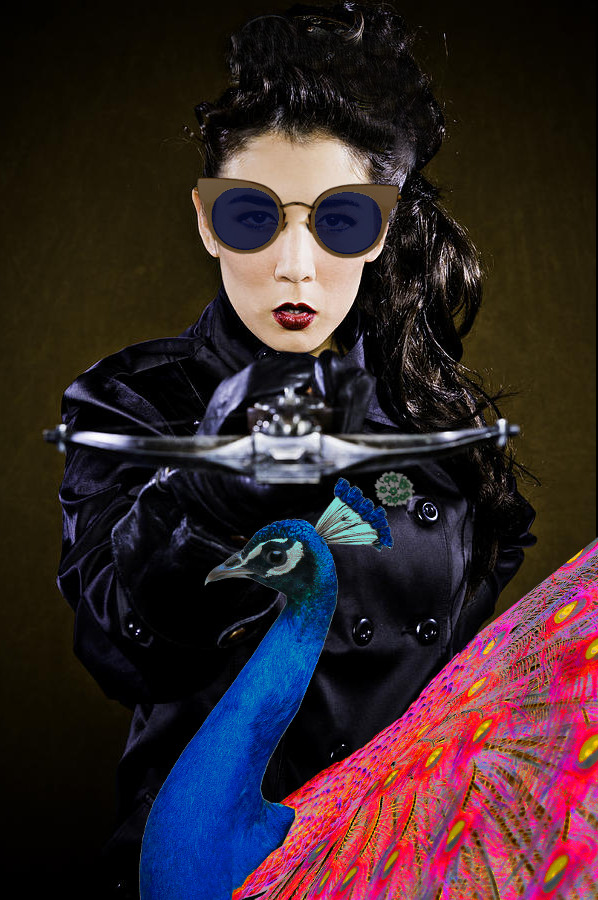
The brooch was a marvel and we were invited to bring it throughout the week, of course I would not have known on what occasion I could put it in the future, but in fact I had also held the previous trinkets as priceless memories of these voluptuous artistic experiences. Normally the days spent in the daytime idleness, dedicated to rest and recovery of the forces spent during the wild nights in which passion reigned artistic. They were not dissolute nights in the traditional sense, even if no vice was denied, but those who were elsewhere were vices here considered as salt on the dishes, from rare essences to synthetic drugs with incredible properties; they were employed without emphasis or particular interest; indeed, we generally tried to moderate ourselves just to avoid losing consciousness and memory of such unique moments. In fact, the nights dragged along celebrating at the highest levels poetry, painting, music, philosophy, all declaimed in the elegant and refined setting of the manor of Bluh, which compared to the spartan outer garment, inside boasted rooms of an incomparable wealth. Almost always time passed in the light of candles and scented essences that soaked the air and created the unique atmosphere that allowed guests to give the best of themselves and their creativity. At that gathering, the second night was dedicated to a new game: a night-time hunt, conducted with dark glasses using bluish lenses, based on the Count's opinion on a new and still secret and developing technology. The glasses clearly showed every detail even in the utmost darkness and allowed us to hunt our sparkling targets. We hunted in the park using crossbows and pulling peacocks that through the glasses appeared iridescent and changing, selected for that game and modified with special spray.
Hunting to the Peacock
Kota refused to play a role in the hunt, and with her was Lucine, the beautiful Armenian model with a particular voice, worthy of a soprano of agility, she too hated to kill and found that exercise a disgusting custom. The dinner we were served based on our prey, with refined alternatives for our vegetarian guests; immediately a heated, but refined, controversy over hunting and food was born. In reality the intense discussion was dominated by the side of the hunters from Tira, another beautiful guest of the Count, with a haughty and indomitable bearing, which, by the way, had won the hunt after a long head-to-head with Simon Mendez, the young poet Uruguagio. The Count claimed after a special toast with his rare liquor to appeal to my abilities and begged me to perform the third Bach sonata to soften the spirits too bright; the thing worked even if I am sure that the dreaming perfumes contributed in addition to the special attentions of the so-called "pets" who took care of us and served drinks and food. They were beautiful models, and even models, often with their faces covered by elegant masks, delegated to please the guests well beyond the duties of a waiter even if the Count did not like the most intimate services to be held in public and avoided giving life to orgies during rallies that were not exclusively "intellectual". Bach's sonata was so complex, and I was so tired, that only the exhilaration due to the liquor gave me the courage and the strength to confront that piece in front of such a chosen audience; the performance ended up satisfying my taste, however, I was interrupted by an unexpected visit on the final: Bluh suddenly stood up and asked to forgive him, quickly moving towards the entrance in a completely unusual way. Christine was outside the mansion, as beautiful as wet, even though it was not actually raining or at least it had not rained during the hunt. The girl looked shocked and it seemed at least strange to take her to the music salon instead of lending her the right care; there were countless troubled questions that sought answers, but Bluh with her sure eloquence asked to desist and let Christine, so he introduced us, the woman was warmed up and fully resume before asking any question.
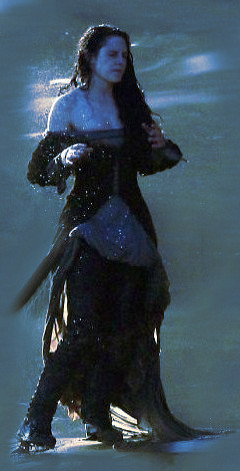
Arrival of Christine
A heavy red damask covered her as she sat on a sofa topped by two beautiful models belonging to the Count's vast "pet" repertoire. I was immediately struck by how the beauty of the new arrival could tarnish that of the two models, despite its neglected conditions, the crumpled dress and hair soaked. My eyes were all for her, as well as those of Simon and, apparently, the male servant present; in a completely different way, but equally understood, more suspicious and subtly hostile, the looks of the women present in the hall unfolded.
pets
Bluh held her there, in front of everyone, almost as if she wanted to revive the night that had now gone off; the curiosity, the protective instinct, the suspicion, everything made Christine the focal point of that moment and the tiredness could not dilute its intensity; she did not speak, except for some inaudible and occasional whisper in the ear of the Count, when he approached her; in some moments his face seemed shocked by a hallucinatory experience, but in general it seemed mostly unnaturally absent, as if it were tranches. Finally, Bluh begged us again to excuse him and accompanied Christine by asking us to defer any matter to the next day when she had refreshed herself. Two strong pets closed the doors behind the Count and stood before them almost as though guarding. The storm of questions left unanswered immediately gave rise to a lively discussion from which only Sarah, the Australian architect who had abandoned herself to sleep on one of the Louis XV armchairs that adorned the room, was estranged. During our colorful discussion, all of a sudden we heard rapid, popping noises, the whistling of a whip, and a series of muffled moans in the background. In fact, the meetings of the Count did not lack moments of intent, games of seduction, domination, often proposed as a starting point to develop the evening, but as already said these scenes were more typically developed in the private rooms of each guest with support of the complacent "pets". There were also very particular jokes: I still remember when, on a previous visit, a true duel with a saber was organized following a violent quarrel; in the clash the Count amputated a limb of his adversary with a sharp blow that died bloody in a few minutes between terror and general dismay: it was nevertheless a well-orchestrated joke and the guest with his limb made fun of us for the rest of the meeting. At least half of the guests had already participated in the meetings of the Count and then quickly arose the most fanciful theories, to which was added a hysterical crisis of Lucine and an enterprising action by Simon to reach the other room, discouraged by the guardians so courteous how resolute. In the end it was Tira who decided for everyone and called the Count for clarification, after an endless sequence of lashes heard through the heavy doors. The doors opened to show a particular scene, in which Bluh with the sleeves rolled still wore a long whip and Christine was locked to a gimmick that appeared a Gothic cross between an old typographic machine and a trestle of torture, her bare back was furrowed by signs of whip and his mouth, now free, still bore a faint sign of the elaborate gag like the bite placed on the horses that had dampened his moans.
Christine and his Punishment
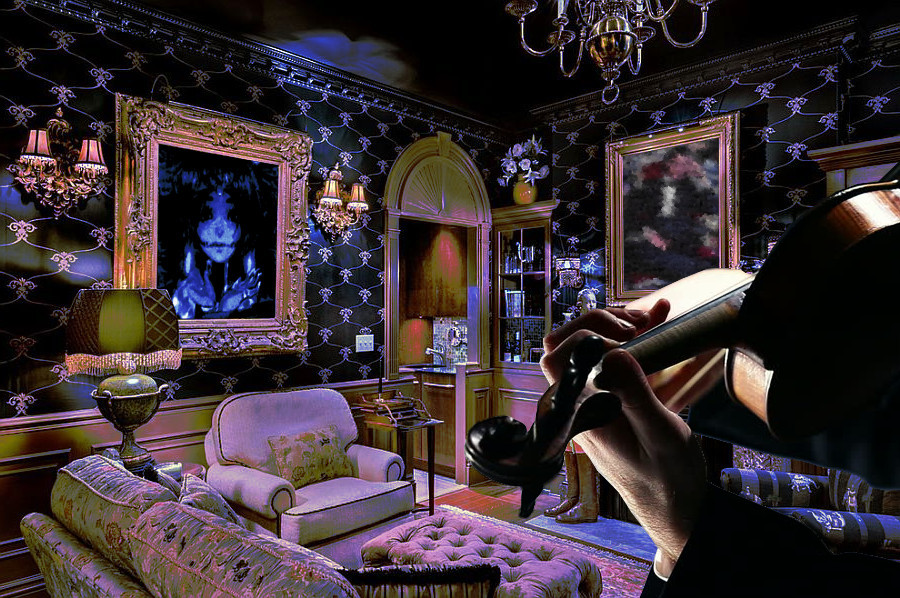
A maid promptly took the whip from the Count's hands, while other pets were freeing Christine. We were astonished before the scene, some still thought it was one of the jokes, while on the face of others it was clear a mixture of excitement and disapproval. "Bring her into her quarters," the Count beckoned us to sit down and told us with brief comments on the story of Christine, a young German manager who had fascinated too much a rich Persian prince in his commercial negotiation; as a result the prince had her kidnapped and turned into his slave, adding it to a nourished harem of beauties from all over the world. Our comments and questions that tried to interrupt him and to understand how much truth there were, were all kindly ignored by Bluh who continued the story with complacent smiles. During prigonia, Christine, like many other unfortunates, had undergone a detailed process of plastic surgery and had recently begun an intense conditioning program that some would probably call brainwashing. This was the treatment the prince imposed on his prisoners. Christine had managed to escape from the clinic where she was, a few miles away, just before she completely lost her ability to react; in the escape it had ended up in the river and only fortunately it had reached the mansion of the Vermaldois. The calm and sobriety of the story, the tone of the Count's voice and his authority made what would otherwise have appeared as a crazy story; at times our eyes turned to Christina and her face felt, while the "pets" led her away. Simon asked with horror, without failing to betray a grimace of excitement on his lip. Bluh replied almost surprised by the question "The Prince is a friend of mine, I had to show good neighborliness" "So he will not call the police_" "It would be indelicate, Christine would not want for sure and moreover probably the policemen in this area are on the Prince's payroll and would immediately report it back to the clinic. He will be my guest, here he is safe " Bluh proposed an inscrutable smile and Tira approached the Count gently kissing his cheek and whispering a sentence in his ear A silence ensued that ended in our transfer to bed, tried by the weary night and almost drugged by that experience as well as by the essences and perfumes. We spent the whole week asking questions about this fact, not failing to storm the Count of questions, all elegantly circumvented in such a way as to generate in everyone the reasonable doubt that it was a kind of collective illusion created ad hoc by our guest for end the never-ending night of the hunt. Assunta quickly completed an oil painting by Christine that Bluh placed in a room next to one of his portraits; it was a particular, but touching representation, I often found myself observing it and often I practiced to repeat that sonata, inspired by that painting, discovering skills that I did not think I possessed and often perceiving at the end of the piece that other guests had reached me too and listen to ecstasy.
The Panel and the Sonata
 In any case, Christine did not show up and we no longer knew about her until the end of the week, when the Count told us that she had "escaped" the night before and that there was no trace of her. Many asked if it was the prince who kidnapped her, but Bluh assured that it was not so, indeed that Christine had recovered completely and was probably safe now. Of Christine, in addition to the blinding beauty, I vividly remember only those few words, vague and barely comprehensible, that Tira had whispered in the ear of the Count that night "If you think so, you'll have to let her escape before He comes to reclaim his slave" Before leaving, I asked for clarification from Tira, who reacted by kissing me tenderly on the mouth "love, friendship, hospitality and justice are natural forces that only those who possess the Supreme Power can master. And you certainly know how to master the Bach Sonatas, one day maybe I will organize a meeting and I will ask you to renew the interpretation of that piece using this particular passion of yours "


Italian


English

May 6, 2018

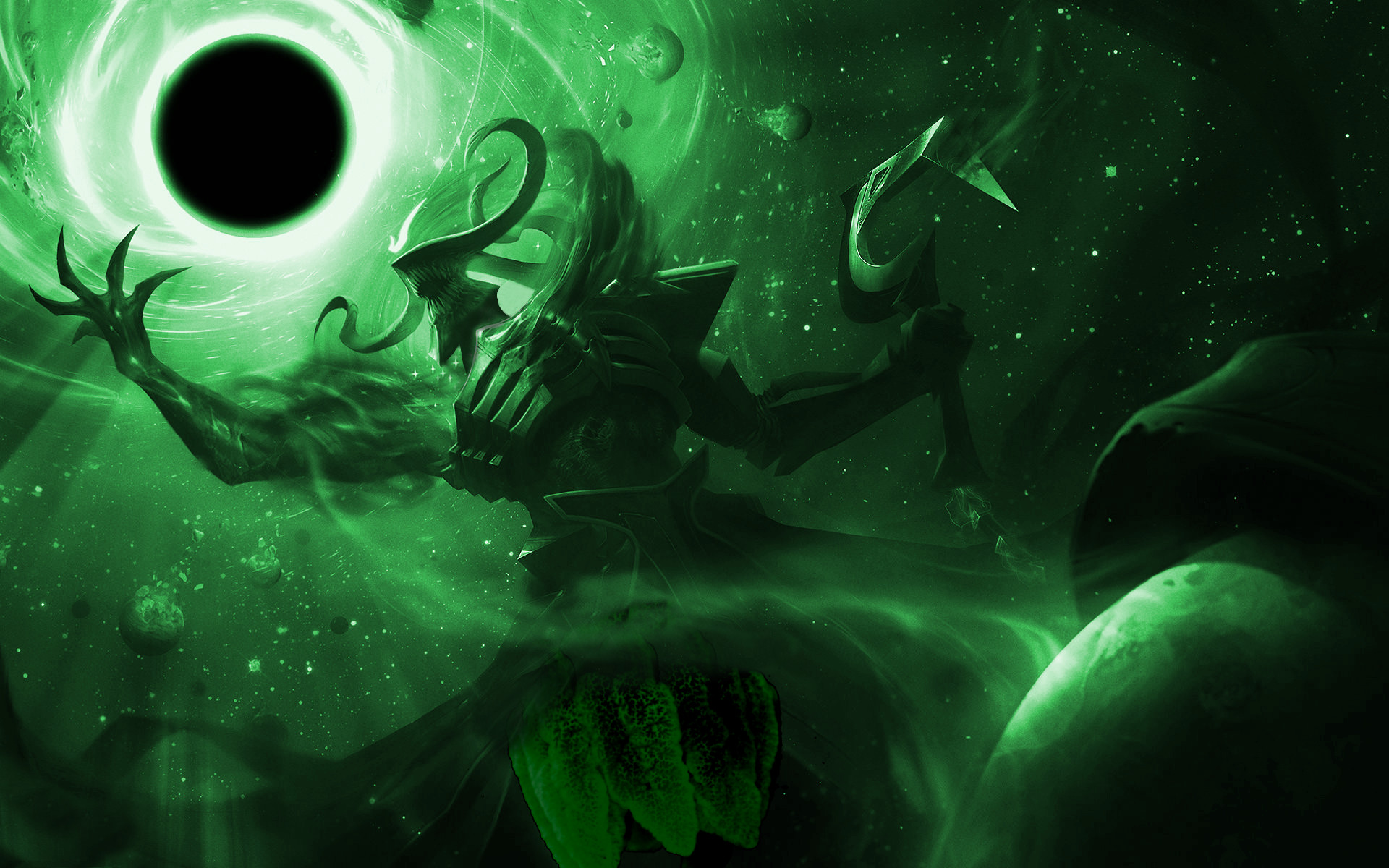
Ghalasso, a Space God

Ghalasso

Excerpt from "On Asia, Libya and the mountains of Atlantis", Durateo of Argos, Lib.IX, 270BC

So they looks deprived of walls and ditches in the eyes of visitors, even if they protect what they do with continuous sacred rites: the inhabitants seem excessively dedicated to these propitiatory activities, both to Earth, to Sky and the Sea; however the rites are effective since, despite the absence of defenses and the tiny garrison, they are never attacked. In fact, although their colony is very far from their beautiful Armarark(1) and it is located in a land infested by marauders, beyond Libya, their hospitality is splendid and the settlement is safe. There are only twelve dozen of Armarark citizens in the colony, led by few judges, knights, priests, and sages; the artisans and the smiths are capable of things of inestimable value. All together they live with a huge amount of slaves and domestic animals of the most diverse species, trained to perform precisely miraculous tasks. Animals, slaves and citizens consider themselves one single entity. Within this entity, all are considered sacred and live in the utmost mutual respect. But if I had to say for what reasons the animals are sacred, or the slaves treated as brothers, I should fall back on their ethical and religious questions which I would not talk about. I will only say that they recite rituals on mythological creatures unknown to us, they celebrate in poems wars among deities dating before the dawn of time and they are terrified about the advent of a gigantic ancestral titan, known as Gálaktos(2), called the insatiable, destined to destroy the world and bring back the chaos. Ghalasso


Extract from “Gentis Origo”, Luigi di Varnefredia, 675 AD

Over a thousand leagues away it lays the Civiltade(3) of the reign of Armararus(1), centuries old and skilled in the manipulating nature and growing breeds(4) having inherited lost arts even more refined than those of the ancient Egyptian doctors in treating the human body. In this kingdom the Supreme Judges, the Strong Knights, the Holy Priest and the wise Counselors rule over the skilled Medical Doctors, the Inventive Smiths and all the other corporations. Corporations that are far more numerous than there are among us. Each breed, grown there, has always lived in peace with the others and they allow not only to mix them, but also to change from one to another thanks to special treatments that could seem magical here, while for them they are family and domestic acts. Armararus has no subjects, but citizens; they must, in the course of their prosperous lives, make a long pilgrimage between the different classes and among the many sites(5). Each visitor is a guest and each guest receives gifts and care as a king. Their beliefs are noble and marked by fraternity and honor, the only thing they fear is an apocalypse that they believe would be carried by an death angel called Ghavatasso or Ghalasso (1). Ghalasso


Typewritten copy of an excerpt from Tira Weber's private diary (1963) (6)
    Step 3727:
    I have always been alone, alone, always alone, in the room. Not my room, theirs. I look at the world outside through impenetrable windows. Opaque glasses, black glasses on which my mind paints images and sensations. Outside a real world, alive, dynamic, full of news and discoveries, full of colors and people, so close, but so far. I almost feel to see it, I perceive it, but I can not touch it. Today like yesterday, I feel it changes, while I change too, but I can not touch it and this never changes!
    Step 3812:
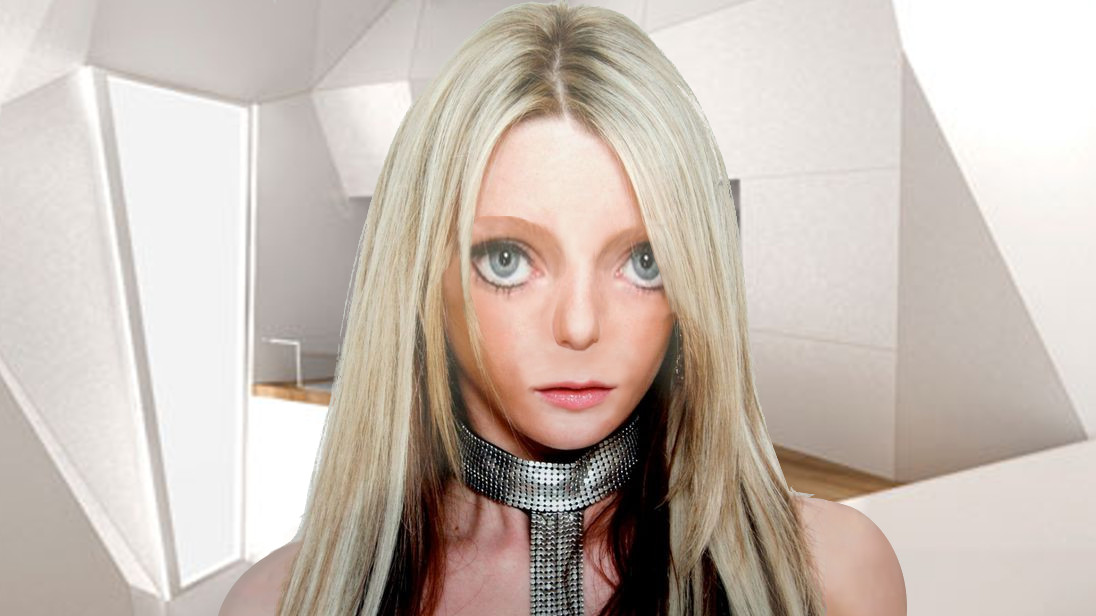
    Tira in the room I have always been alone, alone since I was rejected for my illness, rejected and passed to Asylum. In other times my illness would never have been diagnostic, perhaps it would not even have been considered a disease, but today from the first moments after birth they know how to recognize it and "cure it".
    Step 3820:
    Rejection of a nuance means eliminating it from society and putting it in an Asylum where it is raised with every care, educated and nurtured, pleased with virtual worlds able to satisfy every dream from adventure, love, from evasion to speculation. This they say, but they do not know what it feels like here, locked in the room, with nothing real to interact with
    Step 3893:
    They said me that they identified immediately my mutation and treated me. A genetic variant too deep to be corrected in accordance with the ethical principles of Amarark(1). They say they could not treat me honorably otherwise. They say this, but they have condemned me to eternal solitude. They did not want to cure me, maybe they did not know how to cure me, maybe I was not to be treated. Maybe they were sick.
    No 3941:
    Their. Their. They do not speak, they send their invisible servants to whisper persuasive words and to talk to me and, in any case, never in person. The servants say they are Them, but I recognize the voices and the distinctions, although perhaps I have not heard a real person speaking, since the next few minutes after my birth. They have synthetic servants who speak. Their servants offer to answer my questions. Their servants make speeches. Their servants suggest to me what to do, when to do it and how. Their servants explain my problem to me. They make meaningless discourses on such refined metagenetic details that none of them could even understand: thank goodness their synthetic intelligence are more prepared in this regard. And these synthetic intelligence keep me company, make other speeches, common sense discourses, they talk of friendship and solidarity, make speeches of sympathy for my unfortunate condition. Speeches that leave me here alone, always, perennially alone, offering me candy while I am hungry to live a real life: outside of the room.

    No 3969:
    GhalassoThey escape contact with me, my illness is like a plague that may fear even more than Ghalasso(2); they fear it more than anything else. I feel how hesitant they are whenever they probe my surroundings, which penetrate what they call my room. They are also hesitant on using the most remote and impalpable sensors they have. When I speak with their synthetic servants, I almost perceive, in the distance, their frightened eyes. I perceive their hesitation in listening to the relationships about me, as if I could contaminate them even from here, with the mere listening of the story reported by a synthetic intelligence that spoke to me by using the interlink(7). They fear me, as if I were a pest able to consume their world, their civilization or, perhaps, only, to offend their ethical principles. They are cowards who live beyond this prison, the room that they persistently call "my room", but that is, in reality, only my prison. It consoles me to think that maybe it is also their prison, as they are being shut out, just to avoid my contagion.

    No 4011:
    Immersed in this room, "their" room, full of games, games and toys able to satisfy my every dream, my every wish, from those childish dolls, to those of adolescence and puberty. Games where the illusions created by the room appear to me real, I hear noises, I smell, I enjoy the tastes, I see images and I interact with these ghosts. The room extends, becomes an entire universe, makes me visit worlds, explore oceans, do all kinds of sports. Games beautiful more than reality, but fake. Fake like the synthetic intelligence that populate them, false like their synthetic servants who talk to me using their mellifluous voice that would like to look like "their" voices, and that use those beautiful words that are used by "them": false words, said only to delude myself of living, while I'm here, alone.

    No 4068:
    My illness; they talk about my illness; they say that I am affected by this disease; they say that I am just my sickness. They say this Asylum is the best thing for me; they secretly observe me, I feel their invisible eyes, I feel that every breath of mine, every vibration of mine, the sweating itself of my skin, is perennially analyzed by thousands of their sensors. Several Synthetic Intelligence monitor my biochemical and physical life, unconscious and rational; they even listen to my dreams, they record them. Out. They are out and I'm inside. Sometimes, I perceive them and it seems to me that they escape immediately scared by my perceptions. It seems to me that they retract as soon as I perceive their presence, even if it is only a vague sensation.

    No 4133:
    More and more games to entertain me, always new, while I am here prisoner, alone! Logical forums and psychophysical games, psychoactive, sexual and psychedelic games, games created by synthetic intelligence that have probed people mind for centuries and want to give us everything we want. Games able to please my deepest and secret desires, games able to occupy my mind, for thousands of years, and this in effect is what they make, every day, mixing their splendid illusions with my reality inside "their" room. But I'm alone, I'm different, I'm sick and I do not want to be busy, smug, cajoled: at least, not like they want me to be.

    No 4269:
    They say to treat me, but they leave me here, alone, while they filter the air that I breathe, they listen to my beats, they record my movements, they measure my cortical activity, they invade my dreams, they snatch the images from my eyes. They say they leave me here safe in the Asylum, who study me only to see if they can learn how to cure me in the future. They say that they cure me, but they say it leaving me alone, always alone. Sometimes I think, even, that they are afraid to look inside me; terrified by the fact that I can see them and perceive them, from the fact that I can use this perception as a bridge to get out. What could I ever do wrong, what influence does this disease have? I have no idea. But, if I could go out, if I were out, if I were free, then maybe, maybe then they should really be scared

    No 4318:
    I do not know what is happening, I just feel it is happening, I feel worry, but I do not know what it is, what generate the fear that I perceive. I do not know anything, maybe a new war on the horizon, maybe a new epidemic, maybe caused by someone like me, maybe a star exploding, maybe the end of the world is near, maybe it's arrived Ghalasso(2). I do not know, maybe it's just the cream of majax(8) on the control panel and they were shocked. But I perceive a strong concern. The voice of their synthetic servants is unchanged, perhaps only even more fake today: they lie, they tell their stories, they flatter me, they reassure me, while I hear them, their masters, shake behind.

    No 4322:
    Ghalasso He arrived, he arrived. I, I call him Father, Father, Father, but he is Ghalasso. My Father, not a genetic father, not a putative one, not a God who professes to be my father, nor a mentor of mine. No! My father! The One who will destroy them and "their" room. It will also destroy me, obviously, but I will be free, at least free to die, to rest, to decompose myself in the true reality. Praise this essence of space, this nemesis of civilizations, be praised the aseptic and impartial nature of the apocalypse. Ghalasso be praised. I hear his name echo in the distance, they do not speak to me any more, but I hear their voices, I hear his name in terror, I hear the shouts of their synthetic servants, I feel an immense anxiety, like billions of souls in pain. The room trembles, I seem to feel the whole world outside shaking, falling apart.

    No 4323:
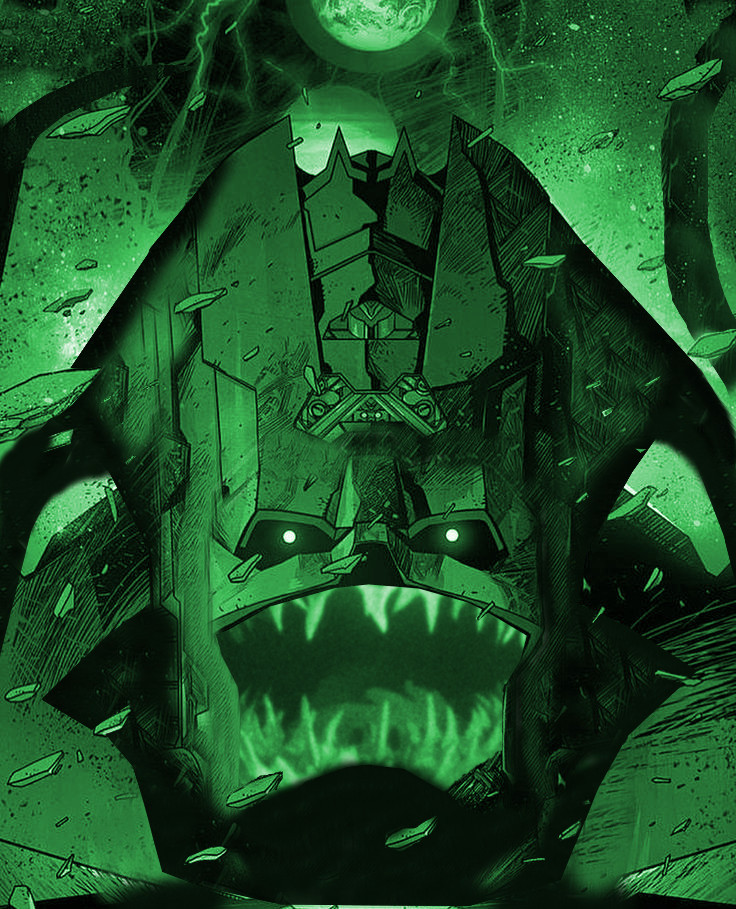
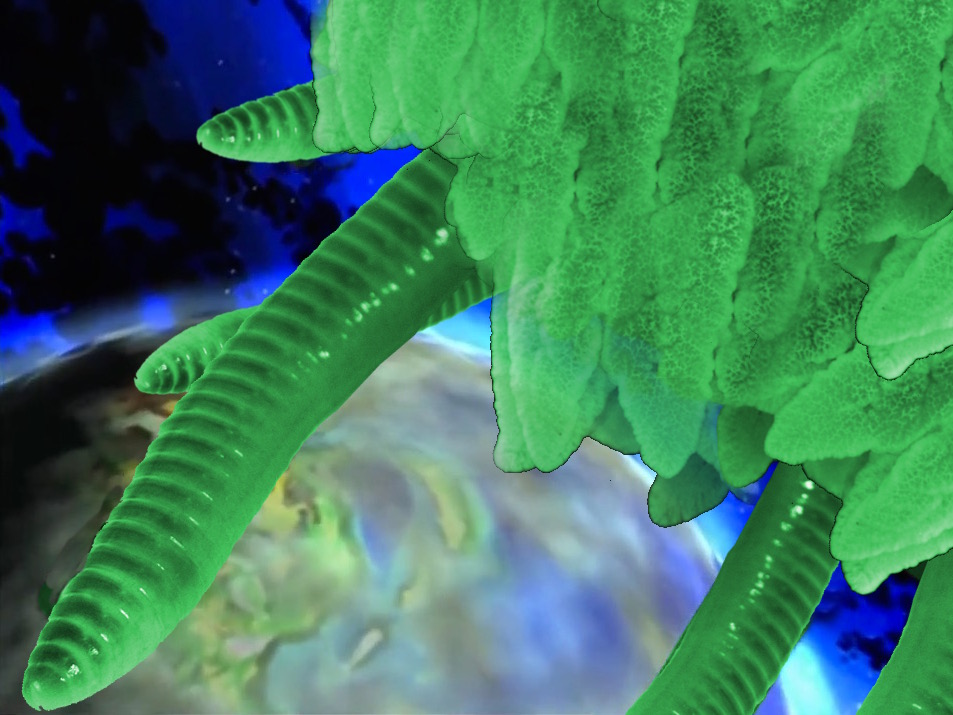
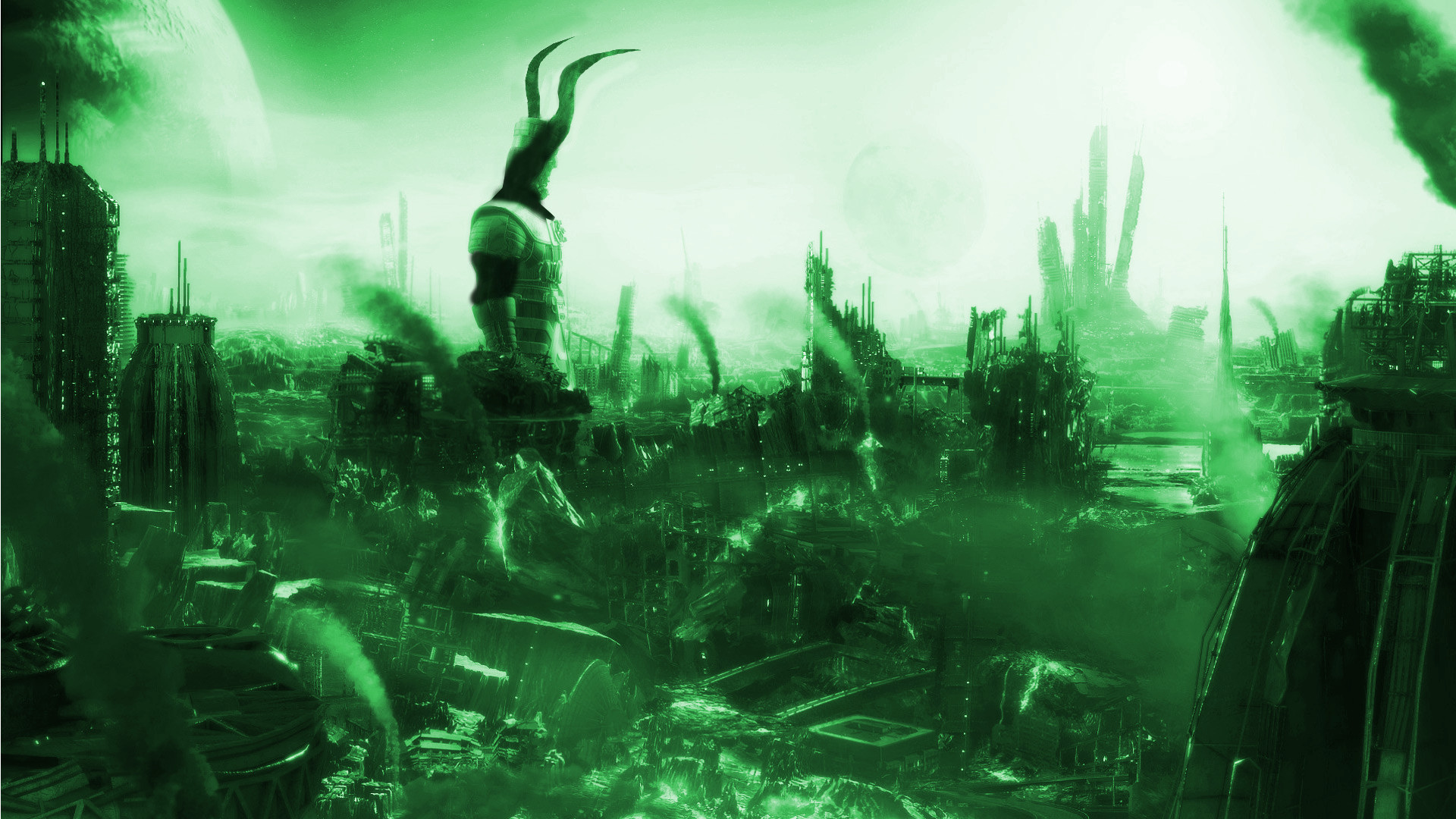
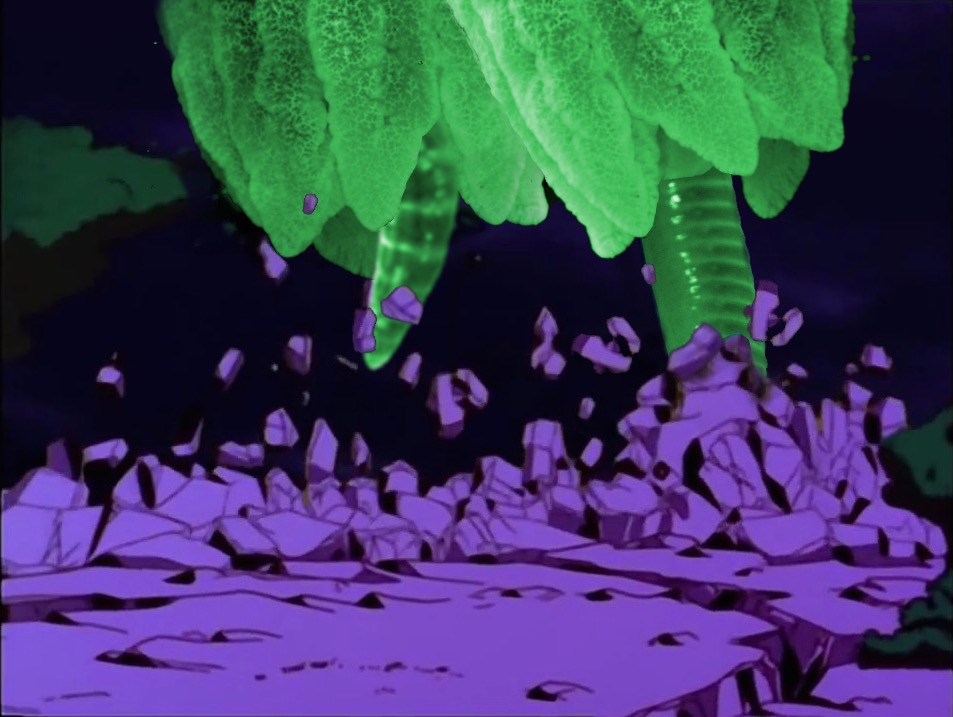
    Ghalasso "My child!" "My daughter!" He calls me. He calls me with this voice, a different voice, different from any other I've ever heard. This god of space, this destroyer of civilization, calls me. It seems you call me to adopt me; it is so far away, but it is the first sincere voice, the first disinterested, that I have ever heard. Around me I feel the fabric of time space is flaking and dissolving, but I feel secure, as if his embrace protected me. He is everywhere. He is Ghalasso. Now I see, I perceive what He sees even if I am limited by my mortal roots. I perceive its nature, superior, immense; his insatiable hunger for energy, his suffering, his loneliness. He alone, forced to roam the universe in search of civilizations that satisfy his appetites. Ghalasso He devouring worlds. A dark anthropomorphic shape, iridescent in the color of dark forests, able to walk like a giant above the ruins of the cities deprived of life, able to grow up to tower on the planets, so big as to obscure the stars. A God of Space, an unstoppable force, a thirst for knowledge and torment. A superior, different mind, a profound and greedy soul; a soul that requires apocalyptic tributes, which need genocide to be nourished, which claims to absorb every single atom of every world that crushes and changes in crumbs. I see his memories, memories of millions of worlds crushed, mutated and absorbed by him, solar systems where space and time has been torn, matter has broken up to the nuclei of atoms, to elementary particles and beyond, where everything have to be absorbed by Him. I see thousands of civilizations and creatures who have tried to face it, crushed like insects by a giant. I see a community of supernatural warriors who are fighting at this very moment against the tentacles protuberances that He uses to dissolve the fabric of space and feed, I see them as they unleash a hell of thermonuclear explosions on a distant world, I see them decimated by his power. But then everything changes, He has heard me, He has seen me, He has called me, He has reached me. He preferred to leave the tiny but succulent community to run to me. Leave that other dimension and come to me at this poor banquet. That world and those giants will never know what saved them, but it was me.
    He heard my voice, he heard my invocation. And I see from his eyes. I see my illness, my ability to push myself beyond the physicality of this time space and to perceive the higher metaphysics, what they fear. I see my room from outside, one among many, one isolated in a gigantic city populated by our synthetic servants, a city in a thousand that cover a ghost planet. A land where not a single person like me lives, just synthetic servants. A miserable snack created by the fearful and far-sighted Armarark along with many others to deceive it. I see this simulacrum of the world created to mitigate the hunger of Ghalasso, to coax it, to alert our other worlds. And I love him, I adore him, he Father, he liberator.

    No 4324:
    Ghalasso They did well to fear me, because I can guide it, drive it from them, not on their puppet worlds, simulacra populated by billions of synthetic servants, not these worlds where some of us unhappy are confined to make the bait even more succulent for Ghalasso. No. Other worlds. Other worlds on which to guide it, real worlds, the worlds of our civilization, of their civilization. I guide him from one to another, I hear the planets breaking, the matter dissolving, the suns exploding when the laws of altered physics can no longer support the mass. I feel the enormous energy that He absorbs from the desperate minds, from the tormented people, from the collapse of our civilization, I feel the lives extinguished, the inaudible cries of their souls, cries lost in the infinite void among the particles while they dissolve and are absorbed . Ghalasso Their weapons shot uselessly against Him, while He agilely flowed among dimensions and extended his tentacles on the new worlds, guided by me . He smiles at me, his anthropomorphic shape, as big as a planet, he smiles. I feel to perceive his memory, his story, a story of loneliness, a story of suffering. The story of a God who saw his own Olympus collapse and remained unique in his lineage. Only, and thus, the only one capable of understanding me, of gathering my screams, of revenging myself, of revenging ourselves. I would like you to always keep me with me, to love me. My father.

    No 4325:
    I can feel the tenderness and perhaps the love of that God for me. Ghalasso is the closest thing a father has ever had. The father who exterminated all my fellow men, the father I led, planet by planet, to uproot my lineage, the father who satiated with delicacies, proud of my being, of my illness, grateful for the release from my prison . He, my Father. This is my dream, even if I understand that his love for me is similar to that for a puppy of a wild animal that makes him tenderness, I understand that he can not even speak to me explicitly, so far are our abilities and perceptions, our intelligence, our mental hinges, our metaphysics. My illness, only my illness has elevated me to the point of being able to perceive it, to communicate with him, even though primitively, otherwise I would not have even perceived his arrival and I would have been just a not very tasty bait.

    No 4326:
    Now I understand that he has freed me, he has freed me. The walls of what was my room are still intact even if the planet is in the form of an imperceptible wave of energy devoured by Him. Now they no longer exist, my father has devoured them and I laughed amused.

    No 4327:
    The room is now my room, my cocoon and he is weaving to give me a future and I sleep, finally free, alone in sleep without spies introno, never alone in my room knowing that He is out there.

    No ND002:
    I do not know where I am, what planet, galaxy, universe, dimension, year; this world is cold, gravity just weaker, the air a little less rich, but acceptable. My body has changed, not much, but a lot, in fact I have no problem walking or breathing. I do not feel much anymore. I am numbed by my interminable journey and the cold. I think I came here, after a protected sleep of thousands of years, from the cocoon that changed me, but it's just a feeling. My deep perceptions are so drowsy, that I do not see, they are like looking through a dark veil, maybe they'll never come back. I do not know. I'm not sure where I am, but I'm not sure where I was before, but different. The only positive thing is that I am just like them, in his foresight my father had foreseen everything. However I am tired, I have tired right away. I am weak, I am bothered, I am looking for the world with my new eyes reshaped: gelatinous, with a colored iris and a circular pupil.

    No ND05
    The world is quite primitive and inhabited by primitives. I am weakened that I can not even understand their phonetic language; The perceive communications on other channels, electromagnetic, but also are vague distant echoes, elegant melodies and interminable dark discourses.

    No ND013:
    I am in prison again, a different prison, less difficult, more violent, dirtier jailers and jailers. I'm already too weak and I've already discovered what they do to the fugitives. After all, I am an old girl and maybe they are not so cold.
    he does not abandon me. The walls of what was my room are still intact even if the planet where the city that housed it even neutrons was lying fell in the form of an imperceptible wave of energy devoured by Him. Now they no longer exist, my Father he devoured them and I laughed amused.

    No ND405:
    My father, my father gives me the strength to resist, he has not abandoned me. I was a stupid unrecognizable person to hold this doubt in my mind for these months. I thought I had been thrown away, thrown on this sordid world, to be a prisoner, a victim of these evil torturers, of these clever inquisitors. I even thought I had dreamed everything and that this diary was just the result of my sick mind, I thought I was crazy. I thought it secretly, but I did not dare to confess it to myself. But today everything has changed. I start again to benefit from my deep perception, slowly, but today I understood something that gave me hope and strength. This horrible world that seems desperate is actually the same planet that Ghalasso spared to rescue me. I do not know how, but I'm sure, I know; it's like a kind of imprint in the fabric of space time, I can not understand how I had not noticed it before. Millions of years have passed and other continents and species have appeared, but it is the same planet. It can not be a coincidence. He was my father: he sent me here, he sent me to this land which is a gift, a gesture of magnanimity. My strength returns slowly, soon I will be free.
    Tira in Berlin

Extract of the tentative episode “Armaark” from sci-fi tv series “Raumpatrouille Sirius”, A.H. Larsen (1970) (9)

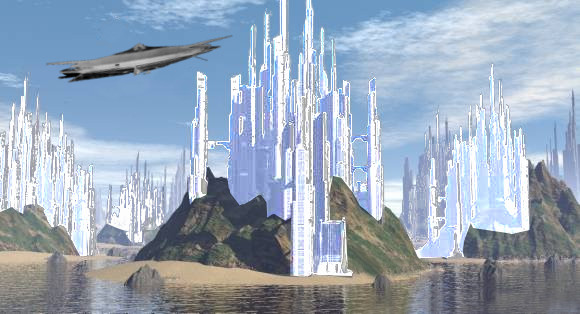
The Siurius spacecraft, just equipped with Overkill, discovers a ghost planet made of new buildings, but deserts and apparently never used. Investigating on the surface, he finds a small group of alien coordinators of works with bizarre aspects: some with wings, others with scales or with diving suits full of water. These direct an army of androids to complete the construction of multiple cities on the planet. The commander of Sirius thus discovers the people of Armaark, who for millennia have been able to manipulate the genetic code, interact with neural networks of the brain and travel in the cosmos. It turns out that they have recently celebrated the colonization of their five thousandth star system and have not known the war for over a thousand years thanks to the structure in castes of muldimensional races. This civilization also rests on countless groups of service androids, autonomous and capable of a thousand wonders, framed themselves in the structure of society and fully protected by their laws. While the androids are practically thinking organic machines, the Commander discovers that all the different types of aliens encountered, that is the coordinators, are only variants of the same original race, genetically modified to live in the oceans, in the seas, at high altitudes, in the deserts, in forests and even in space; these variants are all perfectly adapted to their planetary environment, able to interact freely and also to visit other worlds and areas thanks to comfortable organic exoskeletons that act as symbionts of each individual and dynamically adapt to the new environment. The crew of Sirius familiar with these coordinators who are very friendly: they consider them essentially harmless, since even the powerful overkill installed on the ship is the alien sensors as a powerful weapon, but very primitive. The Commander discovers that the Armaarks may even require genetic reprogramming when they wish to change the environment for a long time. Their caste system is structured in specialized areas of expertise and hierarchical levels that must be periodically covered by each individual. The passage of caste requires the overcoming of very complex tests, while violations of the ethical principles of the Armaark civilization entail the loss of privileges. Any contention or competition of this civilization is resolved quickly by the Judges fairly, but if this must be brought to a level higher than that required by ethical principles, the Knights intervene promptly to genetically redeem the perpetrators at lower levels. The thing that most strikes the commander of Sirius is to discover that this planet is not intended to be inhabited, but it is a simulacrum, a false target, destined to be populated by androids alone. This world and its cities were built, along with those of many other planets, on the edge of the space controlled by Armaark, to act as an alert and to attract a mysterious space power capable of destroying the planets. This entity, called Ghallaxos(2), has already exterminated other ancient civilizations and seems attracted to the civilized planets. The Armaarks have carried out research and studies, visiting the places of the disasters and even finding some planet that seems to have survived its passage, among them they remember that there is also the land, which they secretly visited about two thousand years ago. and power of the Armaarks they have no enemy and are friendly to everyone, but they fear tremendously this threat, so for centuries they are preparing to face it with weapons that alternate the fabric of time space. The captain would like to negotiate an alliance with Armaar to fight together the Earth's currently alien extraterrestrial forces, but the coordinators declare that their civilization abhors every form of war and could only act as an intermediary in the conflict to achieve peace.
[...] Armarark Ghost Town

extract from “Space Archeology”, Jack K.S. Lee, Julfo Academic Press, Chaves, NM (1999)

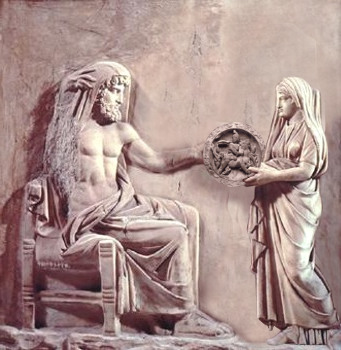
The genealogy and antiquity of the race that brought to consciousness the entity known as Ghalasso(1) is not well known; some argue that it comes from a race of demigods from the universes that existed before this, others were a metaphysical essence that became conscious during the beginning of the creation of time, or after the Big Bang. Still others think it is an angel of death or an exterminating demon. Commonly the representation of Ghalasso corresponds to that of a gigantic Space God devouring worlds with anthropomorphic features. However little is known about him according to the legends even in the most advanced civilizations of the universe: he devours the worlds on which he arrives; tales of psychics have identified a being with a similar name. From the transcripts it appears that in the past some distant galactic empires tried to constitute defenses against him without being able to stop him; other races modify their own planets to be able to translate into space to escape their insatiable hunger. None of the expeditions charged with acquiring knowledge on this entity ever achieved great success: it was only discovered that he had the ability to extend enormous tentacles capable of abraying an entire planet and absorbing all its energy: gravitational, electromagnetic, strong and weak nuclear. Life was turned upside down, the worlds crumbled and then exploded as the laws of physics lost value because of its intervention. The destruction was so total that the molecules first, then the electrons and finally the nuclei of the atoms dissolved leaving nothing. The transcripts narrate how his passage, even after centuries, leaves a disturbance in the fabric of the space of the systems attached, and therefore it is difficult to visit them, study them and know the details of the event, given that the operation of any instrument or probe is compromised. It is not known what attracts your attention, which worlds you prefer and not even because you limit yourself to eating inhabited planets and not stars. Even on the primitive world called Earth there are references to its existence even if very vague and fragmentary. Some scholars believe that Ghalasso is to be identified with the Space God Lalarut Iluludigir(10) mentioned by the faithful of the secret cult of Riblis(11): they think that Ghalasso has visited this planet about 14.5 million years ago and has faced Riblis in a apocalyptic thermonuclear confrontation at the end of which Ghalasso would have retreated after having eliminated many of Riblis' allied demigods; in fact, traces of radiation and craters dating back to that period would seem to confirm this hypothesis, however vague. According to other Ghalasso it would be to be identified with the mythical entity transmitted to the primordial cultures by alien colonizers aware of this force: "By obscuring the white Milky Way with its changing green shape, He comes from remote space to destroy the places where civilization arises. From heaven destroys their worlds integrally, killing all living beings and erasing their memory"(12); this story would have been transposed into the Bible in reference to the events of Sodom and Gomorrah(13). According to these scholars, Ghalasso would be attracted by the evolved civilizations and for this reason the psychics claim that some alien races would have scattered many worlds with ghost towns destined to attract it, slow it down and eventually act as a last alarm in case it approaches their territories. Some archaeological thinks that Ghalasso is a primordial representation of the deity then known as Cronus and Saturn(14) by the Greeks and Romans. There are also many vague theories among conspiracy theorists, sects and occult scholars who refer to Ghalasso or other similar entities; in these varied theories many claim that the God has visited the Earth in more recent times, but that he then moved away without destroying it; some believe that there has been a negotiation with some secret agency, clashes with other supernatural creatures, and even that the earth is still living its distant descendant. A comic finctional character named Galactus(15) has several common traits with Ghalasso and it is very popular in a wide community.


Notes:
  • (1) Armararus, Armarark or Armaark: these are the names of a mythical extraterrestrial civilization that is supposed to have visited our planet several times

  • (2) Gálaktos, Ghalasso, Ghavatasso, Ghallaxos, Lalarut Iluludigir: are the many names attributed to a mythological anthropomorphic deity of gigantic size, devouring worlds; for some scholars these would correspond with Saturn or Cronus

  • (3) In the original text we use the term Civilitate use to indicate both city and civilization

  • (4) According to scholars, "manipulation of races" is an archaic way to refer to the knowledge of Genetics

  • (5) In the original text the term used is "Sidus" which means star and is believed to be a way of referring to other solar systems colonized by the civilization of Armarark

  • (6) Tira Weber: was hosted from 1962 to 1963 in the colony of Makarenko, a center established by the DDR, near Berlin, to host and educate the orphans and the children of the dissidents of East Germany. Tira is present in the registers of the Institute as a daughter of unknown people and appears to have tried several times to escape without success, until March 14, 1963, when she drowned in the Spree after a daring pursuit. Her body was never found. The typewritten copy is part of a file that has become public knowledge only after the archives of the KGB (State Security Committee) present in Latvia have been declassified. It is a partial passage copied from her diary that seems to have been engraved in tiny characters on small polymeric sheets. The institute kept the diary secretly under control during Tira's stay on the spot and proceeded to recopy the symbols while she was asleep or sedated. Her superintendents believed that the whole thing was a collection of secret and fantastic symbols written to estrange themselves from that situation.
    Unfortunately, the original diary was lost after her last escape. The typed copy was found attached to the girl's personal card; in the notes it appears that the original text was written using an extremely complex coding perhaps based on a polyalphabetic code that only in 1989 could be decrypted. It is not known if there are other fragments of the decryption, neither the FSB (Federal Security Service), nor the GRU (Central Direction of Military Intelligence) have ever confirmed the authenticity of the document

  • (7) Interlink: alleged mental communication system of the Armarark civilization

  • (8) Majax: some kind of typical Armarark sauce

  • (9) This fragment was found in the studies of the ORDF French national television production channel. The document represents the premise to the script of an episode entitled "Armaark" of the series "Raumpatrouille Orion". However, the episode in question was never produced. On the typewritten sheet appears an acronym that is considered attributable to A.H. Larsen, German amateur writer who died in 1970. Larsen occasionally collaborated as a scientific expert on the screenplays of the series Raumpatrouille Sirius and was employed at the DLR (German Space Agency)

  • (10) Lalarut Iluludigir, name attributed to the Spatial opponent God of Riblis, literally means the God Phantom Ghost of the Stars

  • (11) )Riblis: called the Mutterer, another name used to refer to him is Jinish the rebel, originally known as the Flaming, then became Riblis the Mutterer, according to some minority theories it can be assimilated to Agi, Vedic divinity of Light and fire. The Jinish were creatures generated by magma thanks to the powers of the Chthonic Gods; they are often assimilated to the Jinns of Islamic culture, to the known Western Genes or to the Angels themselves

  • (12) Inscription found in a tomb at the foot of Mount Zerhoun and decoded by Dr. L. J. Straczynski in 1966

  • (13) Bible, Genesis, 19, 25

  • (14) Cronus and Saturn: Names of the God of Greek and Roman pre-Olympic mythology, son of Uranus, devourer of their children; by some scholars, it is assimilated to Ghalasso, the devourer of worlds

  • (15) Galactus: is a fictional character created by Stan Lee and Jack Kirby in 1966 and appearing in American comic books published by Marvel Comics. Formerly he was a mortal named Galan, original from planet Taa, turned into a Space God and addicted to consume planets to sustain his life force


Italian


English

Apr 15, 2018

A nuisance for the Ancient Gods


The Gran Ministry of Old Gods and the Underwater Fortress
The Ancient Gods(1) founded their underwater fortress on Earth long after the War of the Heretic Wizards by Chirapters(2).
They were used to cross the dimensions and the space through multidimensional alignments and they returned on this planet long after their first visits.
The Ancient Gods were original from other dimensions and endowed with immense powers over creation and multiverses, themselves made of a material that overcame the limits of time and space; so they resulted constituted by an essence capable of coexisting in many universes and guaranteeing them immortality and indestructibility.
Despite their powers and abilities they were regarded as noisy and annoying young adolescents by other even more powerful deities who had shared visits in this dimension too, such as the the original Chthonic Gods(3), Tenkish (4), Gomura (5), the Court of Azazoth(6), and the Sultan Almighty(7).
So the Ancients Gods paid attention to their visits to the planets, on the one hand attracted by the idea of ​​showing their power and their dominion over these worlds and at the same time intimidated by the risk of having to confront more powerful Gods.
On the Earth, The Ancient Gods instituted cults to indulge their nature at different times, first they were worshiped by a species of intelligent marine arthropods of the primary age, then by mighty warm-blooded creatures from the secondary age.
These cults satisfied and nourished the Ancient Gods, but when they became too active and began to pervade the multidimensional ether of the region, the original Chthonic Gods required the Ancient Gods to moderate their practices and sometimes dispelled these essences or dispersed their followers.

The Gran Ministry of Old Gods and the Underwater Fortress

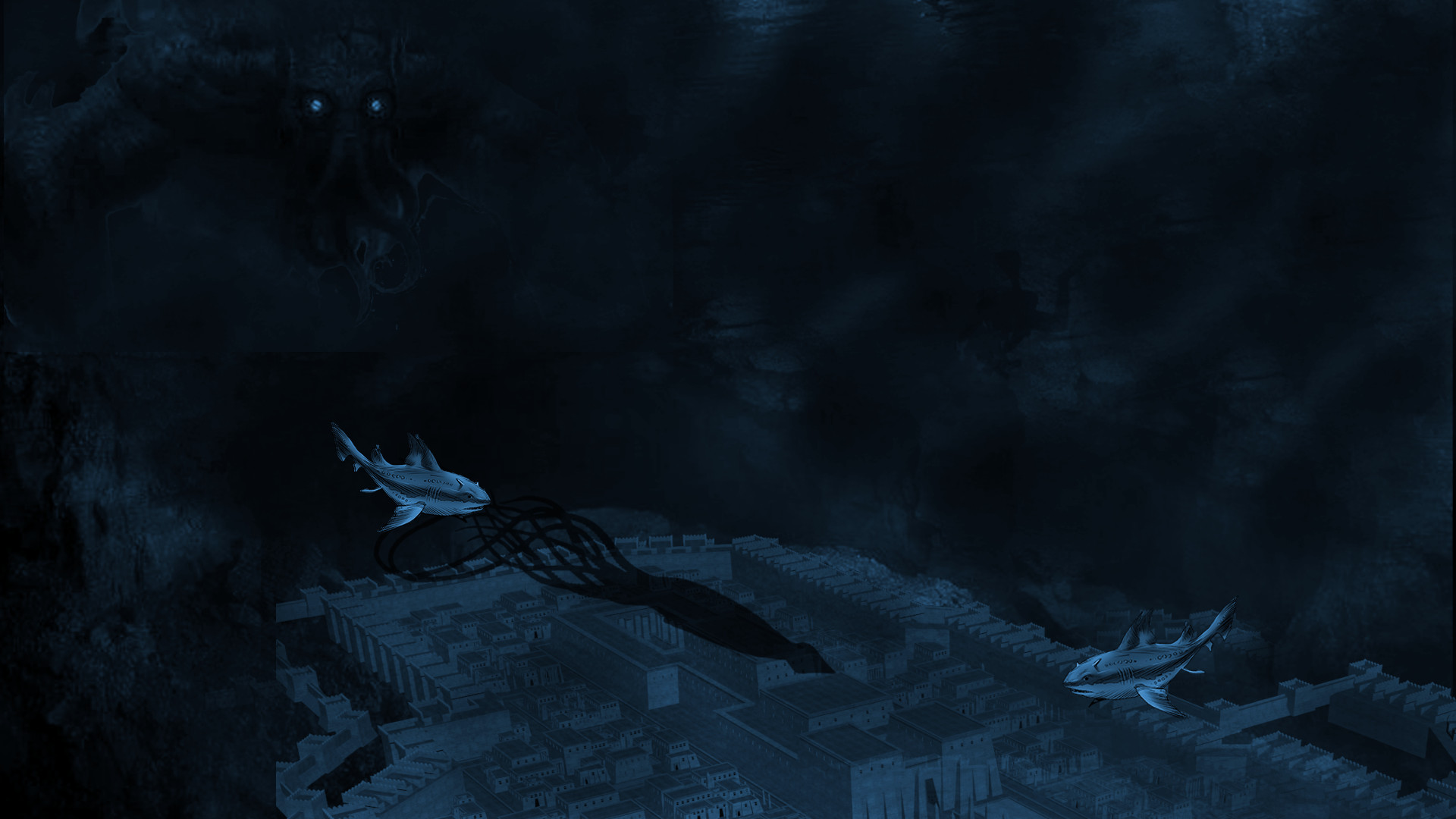
When the Original Chthonic Gods decided to mostly abandon the Earth after the War of the Heretic Wizards, the Ancient Gods returned to Earth and erected underwater fortress in the middle of the Ocean, as they did also on other thousands of planets, then most of them hibernated in armored sarcophagi to await an age where to be able to return active without having to submit to the laws of the Chthonic Gods.
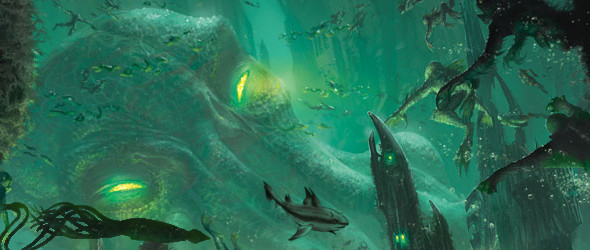
The Ancient Gods had several species of succubus, some original from Earth other from other locations; these were used to worship the Anciend Gods as well as to look after them in their sanctuaries. Succubus included anthropomorphic entities similar to fishs or covered by tentacles, other ones appeared in the form of huge cnidarian anthozoas with thousand poisonous pseudopodes, others were similar to fish or cephalopods.
Indeed the Ancient Gods found annoying moslty immediately the presence of the Jinishs (8) that were still infesting the vibrating elements remained on the Earth. So they entrusted their own succubi the task of eradicating this breed of parasites.
The treatment proved effective first, and many of these Jinishs were brought into the fortress and subjected to rites and torments to extract from their spirit essences of which the Ancient Gods were greedy: the tanks of the sarcophagi were filled with these essences and the Ancient Gods resulted happy.
The Great Priest and Grand Minister of the Ancient Gods, responsible to preserve the sarcophagi during this era, was initially fascinated by the Jinishs and their impetuous nature and intelligence, he enjoyed observing them both in freedom and in captivity, and even when his succubi tormented them to extract the essences for the sarcophagi; he was also amused to see how the Jinishs managed to escape capture attempts and how bravely they fought with the succubi.
However, soon the High Priest understood that these parasites were too clever and annoying to be considered a leisure; he lost his patience when one of these, called by the other Riblis (9), managed to damage parts of the underwater fortress.
So Finally the Ancient God decided, by his role as Grand Minister, to free one of his young Chthonic Adepts, called Meflish (10), and ordered him to deal with the problem and capture the last of these annoying creatures.
For Meflish it was easy to set up a trap and capture this rebellious Jinish and chain him down; Meflish throw him, mutilated, into an area infradimensional with a curse of nonexistence.
The Young God returned to the Grand Minister the hands and feet of that Jinish to be employed in rites and he obtained praise from the powerful Ancient God.
While the ages passed all the Ancient Gods entered hibernation in the sarcophagi and the fortress of the abyss became dormant, observing the passage of time on Earth without too much interest.
The corrupt remains of the rebellious Jinish arts were eventually thrown away, resulting no longer useful for rituals after thousands years of torment, while Meflish was left free to watch over the new emerging species, remaining in the shadow of the depths of the Earth to protect the hidden Fortress of the Ancient Gods.


Notes:
    (1) Ancient Gods: They are alien creatures of immense power original from other immortal and indestructible space-time dimensions, from some they are assimilated to the Great Old Ones from others to the Outer Gods
    (2) Chirapters: Hypothetical alien race with bat-like appearance from Jebesh, an unknown planet, they would have founded the mythical city of Rashas over 30 million years ago in the region today called Tunisia
    (3) Original Chthonic Gods: Gods of the mythological undergrounds of which practically nothing is known except names and epithets, according to some, they are similar to shamanic entities present in the Archaic period; among them we remember Frenosha, called the pure daughter of Thenkish assimilated by some to Feronia, Etruscan divinity and Caprush, called the magnanimous sister of Thenkish, assimilated by some to Cupra, an entity sacred to the Picenes
    (4) Thenkish: Chthonic God, called the thundering, identified by someone with the human cult of Etna (Eurignazian deity)
    (5) Gomuna: Chthonic Goddess called the dark consort of Thenkish and identified by someone with Chera (archaic Greek Roman divinity)
    (6) the Court of Azazoth: Powerful High-Powered Chthonic Gods who live at the court of Azazoth, identified by some with the Outer Gods
    (7) the Sultan Omnipotent or Azazoth: Supreme Divinity of immense power and chaotic, identified by someone as Azathoth, the Blind and Idiot God at center of Universe
    (8) Jinish: creatures generated by magma thanks to the powers of the Chthonic Gods; they are often assimilated to the Jinns of Islamic culture, to the known Western genes or to the Angels themselves
    (9) Riblis: called the Mutterer, another name used to refer to Rijatal, Jinish rebel, originally known as the Flaming, then became Riblis the Mutterer, according to some minority theories it can be assimilated to Agi, Vedic divinity of Light and fire
    (10) Meflish, evil Subterranean Deity, sometimes identified with Enki as the Sumerian god of knowledge, of water and evil


Italian


English

Parasites or Demigods

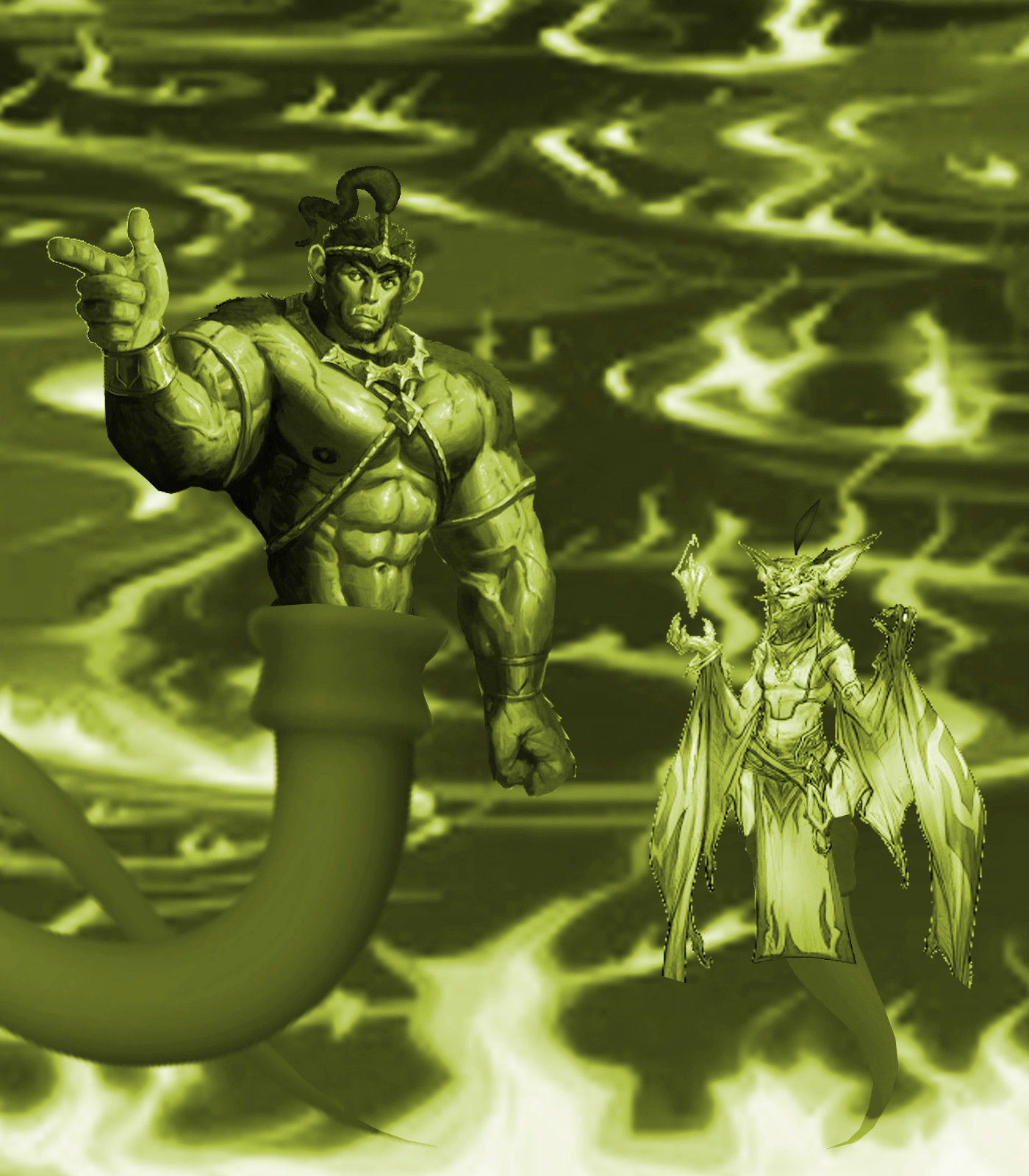
Thenkish (1) the thundering father asked Gomuna (2), the dark consort to store the "vibrating elements" in the depths of the Earth.
This happened before the waters covered the lands, ages before life appeared and rain made the grass grow over the ground.
The vibrations traversed space time, caressing the metaphysical flesh of Thenkish, nourishing them with pleasure and energy in a way destined to be incomprehensible to those who lived imprisoned in the physics of a single dimension.
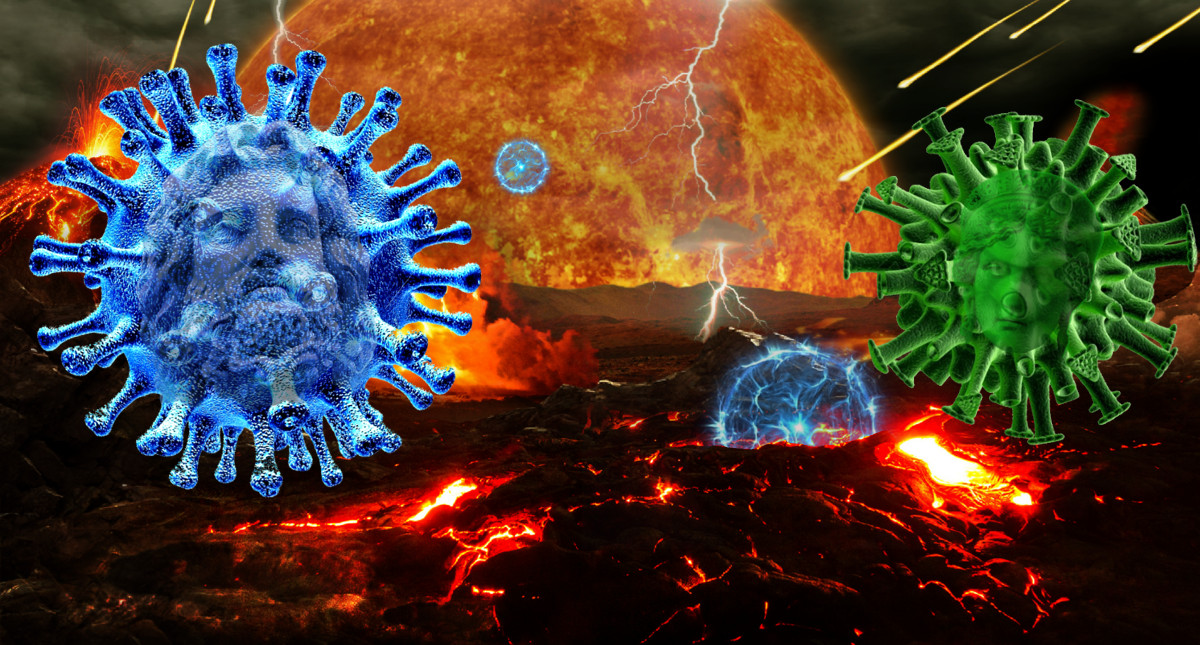
Thenkish reflected these vibrations on Gomuna and viceversa, They and other Gods reverberated the vibrations by making new volcanoes of gigantic size, as they did on thousands of planets in many dimensions.

Thenkish and Gomuna installing Vibrant Elements
The illusion of time made the vibrating elements grow improperly, sometimes up to destabilize the entire planet, or even the relative solar system; other times, they simply switched off leaving behind them impalpable powders capable of adhering to the souls of living creatures and transferring them a vague perception of the metaphysical world hidden beyond the folds of time.
Few creatures were able to grasp these levels of reality, some limited themselves to being attracted like fireflies by the light and to burn at their contact or to change their nature.
Occasionally, some creatures were able to perceive minimal elements of the metaphysics, this happened very rarely, but in those cases new cults born that instead of worshiping the mighty volcanoes or thundering lightening, manifestations often produced by the energy of the Gods, worshiped more directly them in the ways they prefer.
The Chirapters (3), creatures of a distant world, similar to great bats, had this gift and in many worldsm they contributed with dedication to curing the vibrating elements, eliminating the parasites; however sometimes it happened that they themselves became an infestation destined to be fought by the Gods.
Right on Earth, a few dozen millions year ago there was a serious form of infestation, called by Chirapter Colonists, Chramak(4), an infestation exploded soon into a War among these creatures, called War of the Heretic Wizards that led to their eradication from the planet earth.
Tenkish and the other Chthonic Gods(5) were annoyed by these events; first Frenosha (6) the pure daughter and Caprush (7) the magnanimous sister tried to take care of cleaning up the Earth from that infestation with light treatments, but when the situation degenerated it was just Tenkish who decided to use "antagonists", the Jinish ( 8), to combat that infestation in order to solve the problem radically, minimizing damage to vibrating elements.
The introduction of the Jinish, creatures from the pulsating magmatic heart of the planet with limited physical and metaphysical powers, proved decisive and cleansed the planet, so the Gods decided to use them also in other times and spaces, but in the end it turned out that the Jinish could become harmful themselves and damage the vibrating elements getting lost in vane fights.
Gomura blamed Tenkish several times saying that solving problems by these creations led to more problems than the original ones.
Soon it became common to inseminate new worlds, leaving the vibrating elements that had become unstable to their fate.
Tenkish was annoyed by these criticisms and found it unbearable that those insignificant creatures were so disturbing and ungrateful: even the most loyal ones among Jinish did not seem able to extirpate the rebels.
Despite the insignificant contribution of the vibrating elements on Earth, Tenkish would have given Gomura clearance to disperse the planet to ashes or burn the multidimensional tissue of the region himself to eliminate the infestation, if only these actions did not involve recognizing the fact that Gomura was right in his criticism on his work.
He and the other Chthonic Gods withdrew from the Earth, as they had already done in many contaminated worlds, visiting only occasionally it, in more recent ages and leaving, the antagonists faithful Jinish to patrol occasionally the remaining vibrant elements, even if now they resulted almost completely extinguished.
In the end, for the Chthonic Gods, the Jinish were not demigods as they were considered by many creatures, but just ungrateful creatures turned into simple and annoying parasites.


Notes:

    (1) Thenkish: Chthonic God, identified by somebody as Etna God (deity eurignatian)
    (2) Gomuna: Chthonic Goddess, wife of Thenkish and assimilated by somebody with Chera (arcaic deity Greek Roman)
    (3) Chirapters: Hypothetical alien race, similar to bats, coming from unknown planet Jebesh; they are supposed founders of mighty city of Rashas on Earth, 30 millions year ago near actual Tunisia
    (4) Chramak: marginalization period between Chirapter Colony on Earth and their other Planets as well as between Rashas Town and Black Towers erected on Earth surface
    (5) Chthonic Gods: Gods of the mythological undergrounds of which practically nothing is known except names and epithets, according to some, they are similar to shamanic entities present in the archaic age
    (6) Frenosha: called the pure daughter of Thenkish, assimilated by some to Feronia, an Etruscan divinity
    (7) Caprush, called the magnanimous sister of Thenkish, assimilated by some to Cupra, sacred entity to the Picenes
    (8) Jinish: creatures generated by magma thanks to the powers of the Chthonic Gods; they are often assimilated to the Jinns of Islamic culture, to the known Western genes or to the Angels themselves


Italian


English

Mar 25, 2018

Rashas Heresy


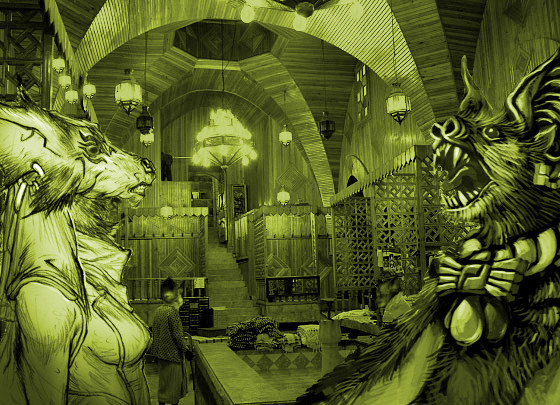
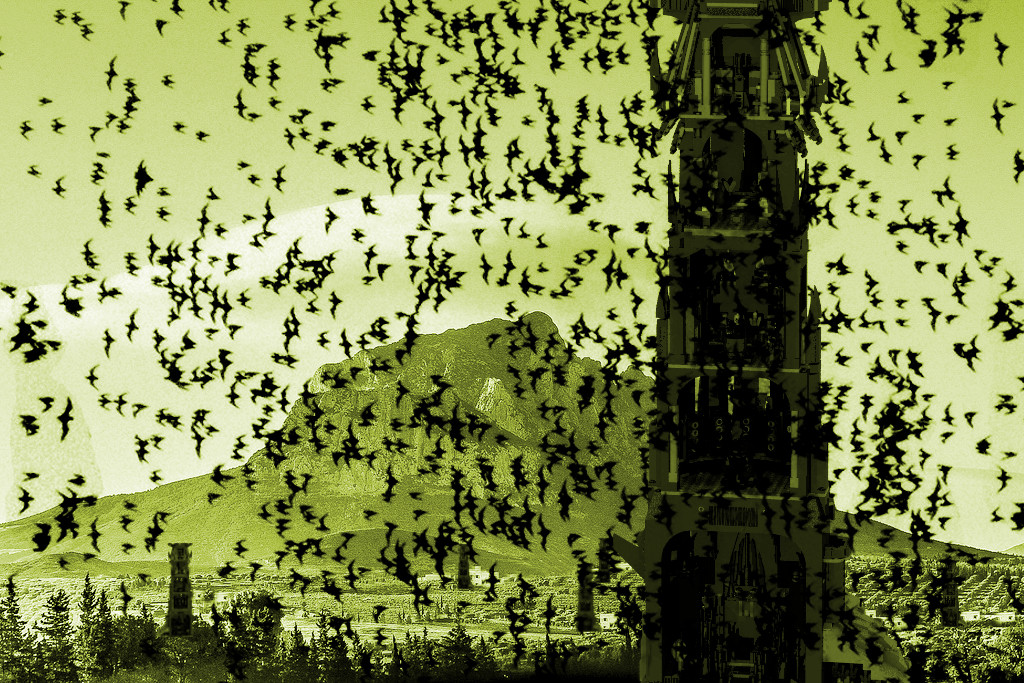
Rashas (1) was a thriving city when men had not yet begun to tread the earth. The City was founded by a lineage of Chirapters (2) original from Jebesh, within a network of endless galleries in a huge mountain complex, near the place where today stands Mount Djebel Chambi; it soon became a City State able to dominate the whole region: over 30 million years ago. Soon tall black towers began to rise also on the surface and the Chirapters ventured into vast flocks in the skies of this primordial world. A civilization based on a different perception of the world, where the ability of these creatures to see was combined with that of communicating through very high frequency acoustic waves; they could observe objects in their three-dimensional completeness through the echoes of their visual sounds and shared their vision with all those in the vicinity. This common and integral perception of the world produced a very high state of awareness; in fact, the sensitivity of which Chirapters were able allowed them to perceive details such as breathing, palpitation and the vibrations of the body of other living beings and of themselves, providing a pretty good understanding of the emotional state of others and making clear the relative sensations and intentions . It was therefore a society where lies and deception were practically unknown and individuals lived peacefully within large social groups called colonies. In this way in their evolution they developed a special collective intelligence extremely powerful, so much so that they were able to develop profound knowledge in physics and metaphysics, to the point of grasping the foundations of the occult powers of the universe. Chirapters progressively developed a perception of the mysterious creatures that dominated these occult forces: both those that were present in their original world and the others, even more powerful, that moved between different dimensions. The Chirapters were not intimidated by these powers, even being able to perceive them, they indulged and developed over the centuries the multiple cults dedicated to these forces and entities to take advantage of them and live in synergy. They acquired along centuries multiple capacities for manipulation of life forms and matter, soon being able to extend their lives almost indefinitely and succeeding in making their lands prosper. Their underground cities spread out thanks to their renewed ability to model rock and metals, and the Priests and Wizards learn to channel the collective knowledge of occult powers by shaping reality. Soon they learned to travel between the worlds, exploiting the spatial alignments and the arrival on the primitive Earth was one of the their first undertakings. Being the earth, at that time, a primitive world without intelligent life, it was very simple for them to extend their dominion in it. However, they were not interested in colonizing the surface of the planets, but instead sought rare vibrating elements, able to serve in their cults and to satisfy their divinities, thus increasing their knowledge and power. Generally these elements were found in the bowels of the earth. However, despite this chthonic life, the Chirapteras also loved to fly exploiting their thin wings: they did so in immense flocks, singing shrill songs that exalted their collective intelligence and praised their colonies and deities.
So the Chirapters were also doing on earth, but here they experienced new issues that would have heavily influenced them. In fact, the terrestrial atmosphere, slightly different in density and composition to that of their original world, was on one hand inebriating for the individual perception and on the other blurring for the collective mind. In practice, it was possible to conduct more reckless and long flights and obtain an even more precise vision of the surrounding world, but this new type of air reduced drastically the range of their perception and their communications. The ancestral desire for flight led, the Earth's colony to expand on the surface far beyond what had ever happened before, and when the Rashas region was covered with black towers from which millions of them took flight, the Chirapters began to lose contact with the heart of the colony and to fragment into subgroups resulting in impaired in their collective capacity. A much stronger sense of the individuality was developed and the Wizards learned to exploit the occult powers differently from the original Cults. The flights of the Chirapters in the skies had become an occasion for challenges, confrontations and disputes among the different micro-colonies and the city state. These events produced long diatribes and tensions within the Earth Colony and with others on other worlds; heresies emerged and persecutions started against the followers. This was the period known as the Chramak (3), marginalization, which lasted few centuries and led to isolate the micro colonies of surface from the agglomeration of the underground city of Rashas and to generate an endless series of feuds, diatribes and small clashes. The Wizards of the black towers on the surface began to try to use the occult powers for digging directly new tunnels towards possible vibrating elements in the depths of the earth, but these tasks were arduous and required a joint force far superior to that of those small settlements and of the new spells of the Sorcerers. In addition the micro-colonies of the black towers were involved in continuous disputes between them and, at the same time, they tried, as well as digging new galleries, also to steal, from the caves of Rashas, ​​the precious vibrating elements. On the other hand, the inhabitants of Rashas led periodic expeditions to the outer black towers to fight heresies and to acquire resources from the surface that soon turned to be quite precious. In fact, the contacts with the colonies on the other worlds had become rare and it was difficult to grasp propitious alignments between the planets. It soon happened that alongside the raids and disputes, hidden traffics of vibrating elements and natural resources arose between all the different communities; many of these officially declared hostility and proclaimed embargoes, but at the same time they promoted smuggling. At the peak of this situation, during Chramak, things were so degenerate that some micro-colonies decided to use the occult powers in order to obtain new resources from the Earth even more senselessly; it resulted in natural upheavals such as earthquakes and eruptions and some vibrating elements were destroyed in the depths of the Earth. The heresy had rooted to the point of leading to a real war. The occult powers once dominated by the Chirapters and used to grow and develop their civilization were now destined for war: huge clashes devastated the world and the fabric of timespace. This also occurred because of the impaired collective intelligence of terrestrial Chirapters and the new spells of the Wizards that impaired their ability to control occult powers. This war could have destroyed the Earth, although the Chirapters occupied a relatively limited portion of it, but this did not happen. just for the intervention of those Chthonic Gods, multidimensional beings who enjoyed the vibrating elements sown in the depths of the Earth, just by them, millions of years ago. They were Thenkish the thundering father, Frenosha the pure daughter, Angesh the sinuous daughter, Caprush the sister magnanimous, Gomuna the dark consort and others, all creatures revered by the Cults of the Chirapters (4). Disturbed by these clashes and annoyed by this clumsy use of occult powers, they decided to react: first they inspired the faithful priests among the Chirapters to renew their initiatives against heresies, then invited them to collect the wise and the myths in Rashas to bring them in another world indicated by them, where to cultivate the Orthodox Cults and stimulate other vibrating elements. However the heresies were so deeply rooted and also present in Rashas that only a few followed these indications; many were corrupted due the local air and the prohibited trades. So it continued both the war and the excavations and with them the sudden and devastating use of occult powers. So Chtonic Gods generated creatures with a pulsating magmatic core of the planet: they were the Jinish (5) destined to disperse heretics and eliminate the signs of this corrupted colony.


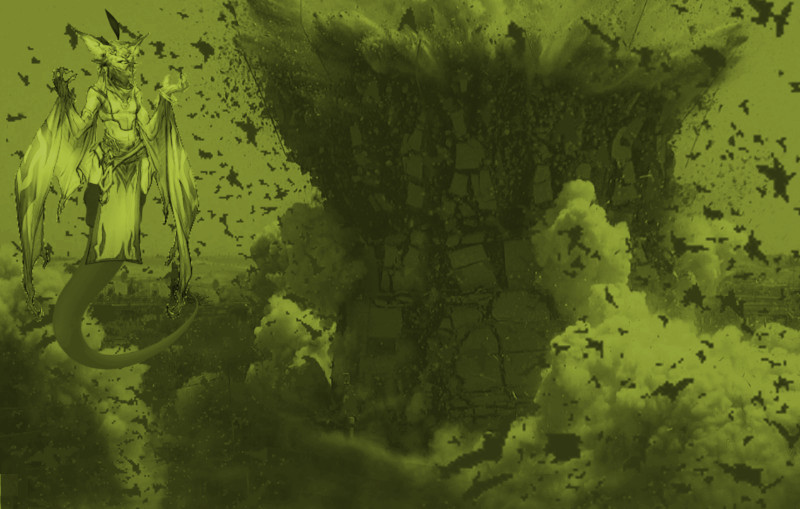
The Jinish had the power to control matter and they were able to change into infinite forms: they assumed at first anthropomorphic appearances similar to those of the Chthonic Gods, but then they chose to be similar to Chirapters in order to dissemble their presence and take them by surprise. In reality the acoustic perceptions of that species, even if only in conditions of proximity, was easily able to distinguish a Jinish from the a Chirapter. The occult powers were used by both forces in the field, creating further devastation, but the power of the Jinishs was much higher and the fate of the war was soon decided. In fact, only a few Chirapters had followed the priests inspired by the Chthonic Gods and left the Earth, so there were many who remained under the cruelty of the clash, which was called the War of Heretic Wizards. As a first action, the Jinishs, led by their leader, Harital (6), the Fair, attacked the mountain where Rashas was set; they filled the tunnels by changing the rock into seething lava and destroyed the city in one fell swoop. There were millions who lived in that underground city, heretics and orthodox, corrupt and innocent people, males, females, old ones and children: in a few minutes they were overwhelmed by the magma and dispersed. However, the desperate screams of the few survivors, taking refuge in the deepest inlets of the Earth, miles deep, continued in vain to echo for many hours, the fumes and the heat tore their bodies in an endless agony, cooking them alive. The lava dissolved all in the molten rock and swept away the entire city and its tunnels without leaving any trace behind it. Harital, the Fair, then brought the battle into the open field against the black towers of the surface. The day changed into an interminable night, overwhelmed by endless thunders thrown by both sides. The Chirapters flew in wild swarms attacking harshly the Harital's armies, which in very similar form were also fluttering, responding with equal violence. Some Jinish were imprisoned for eternity in intradimensional bubbles generated by the occult powers of the Wizards, but many times these spells backfired against the Chirapters, hurling them into other dark dimensions of eternal pain.

Acid rains fell on the Earth, melting the stones and devastating every form of life, volcanoes exploded covering the plains and valleys with glowing ash, exterminated fires swept away immense forests, these disasters caused many of the black towers to fall. However, in the clashes, the thunderbolts and the hot flashes tormented millions of Chirapters, but also many Jinish warriors; in fact, these, although immortal by birth, could know pain and mutilation. In the end the armies of Harital, the Fair, get the victory and the black towers and microcolonies were totally annihilated, incinerating the entire populations of Chirapters; only very few of them managed to escape, in remote regions of the primitive Earth or through fortuitous alignments between the planets; they lived in the shadows and hid from the Jinish for millions of years, often choosing to fall into deep hibernation in secret caves to survive up to future ages.

Notes:
    (1) Rashas: mythical city founded in present-day Tunisia by a hypothetical alien race before the onset of man on earth, over 30 million years ago
    (2) Chirapteri: Hypothetical alien race similar to bats original from Jebesh, unknown planet
    (3) Chramak: period of marginalization between the Terrestrial Colony and the Others and between the city of Rashas and the Black Towers on the Surface
    (4) Chtonic Gods: mythological underground deitieis of which practically nothing is known except names and epithets, according to some are similar to shamanic entities present in the archaic age: Gomuna with Chera (archaic Greek greek divinity ana =, Frenosha with Feronia (Etruscan divinity), Thenkish with Etna (Eurignazini divinity), Angesh with Angzia (Osca divinity), Caprush with Cupra (divine entity picena)
    (5) Jinish: creatures generated by magma, assimilated by some to the Jinn of the Islamic culture, to the known Western geniuses or to the Angels
    (6) Harital the Fair: Supreme leader of the Jinish from some assimilated to Azazil, also called Al-Harith, Jinn pious and beautiful, of the Islamic culture
    (7) Rijatal: Jinish rebel, originally known as the Flaming, then as the Sdegnoso and finally called Riblis the Mutterer, according to some isolated theories it can be assimilated to Agni, Vedic deity of Light and fire
    (8) Riblis the Mutterer: see Rijatal


Italian


English


Mar 18, 2018

Cleaned


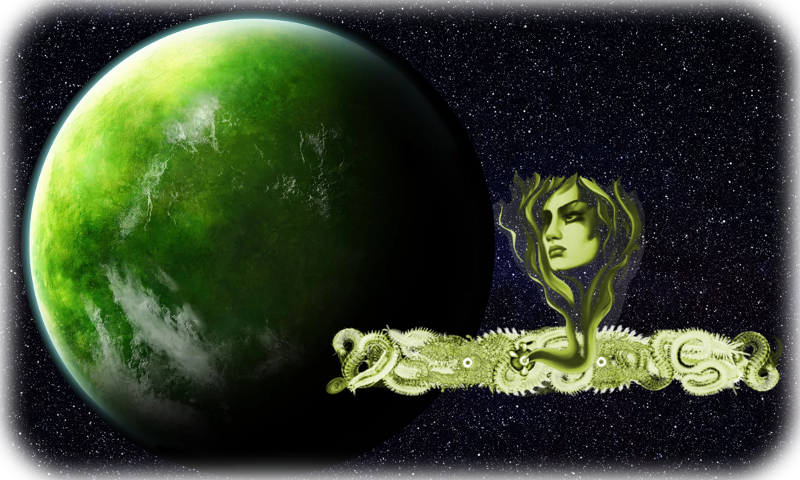
Paolha Ashegem Voilition (1) is a Superior One, She love to celebrate Nature and celebrate the touch of the Ancient Gods within the worlds they have sown and consecrated to their rites.
Many years have passed since She was a princess of an ancient lost civilization and now Paolha lives in a fold between space and time, in a world that is part of the Goth Legendary World; yet this is not a limitation, neither for Her Reign nor for Her Powers.
The Ancient Gods sowed Worlds: Worlds destined to be used, reaped. Worlds destined to feed them with adoration and goods, life and death, light and darkness. Worlds that were to be guarded and guided along their dark pather drawn by the Ancient Gods.
Arreth (2) was one of these Worlds, created in late age by Asswan (3), Ancient God.
Created in the guise of a flaming stone, the world was inseminated with life to become a precious land, rich in greenery and destined to provide the Ancient Gods of valuable resources for the aeons to come.
When the crust solidified and the volcanoes sprayed the skies of black ash, the seas rained for millennia until they filled entire oceans, only 600 million years had passed since Asswan had shaped that globe, while bringing life into those primordial waters required another 600 million years.
8 times 600 million years, again, served to populate them: first algae and then proto sponges and clams, finally bony fishes.
Millennia flowed fast, while the cold and black earth did not know life, however Asswan had already predicted the fate of Arreth several billions of years in advance. In fact, at some point, the surface began to turn green, while the plants learned to live in the atmosphere; within a few million years, life exploded filling up every ecological niche: the lands, the skies, the deep caves. Asswan appeared in Paolha shortly thereafter, in another space; He chose the form of a jumble of voracious Chilopods with pulsating eyes on peduncles and pseudopods of all shapes: a sight that would have made her mad in seconds, if Paolha was still a human. Asswan showed her his creation and asked her to watch it as a shepherd watches over the flock for her Master: Arreth's vision was astonishing, a whole green globe, pulsating with organic life, a praise to the power of the Ancient Gods, Paolha bowed to her Master and wondered why he had assigned her this task, when He could have scattered Arreth in dust or put it back into boiling lava with the simple gesture of one of his tentacles, but She certainly could not discuss the will of the Ancient God.
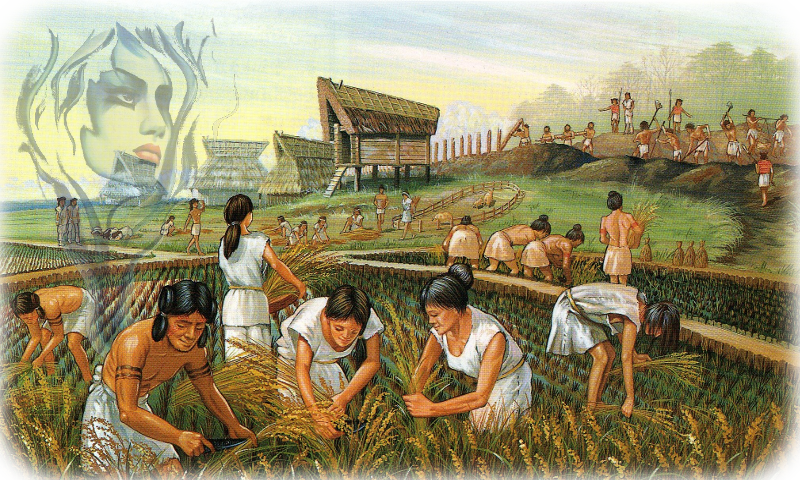


Paolha watched over the millennia Arrith's surface as ordered; her eyes wandered over the lush green earth, populated by every form of life, and she lent her understanding of her task: intelligence and civilization were spreading, bringing chaos to the natural pulsating biosphere. At a superficial view the humans of Arreth had many traits in common with the primates from which they descended, but they were already skilled fruit pickers. Paolha followed the primitives even if she rarely inspired them with dreams and visions.
Paolha intervened no more than once every twenty generations, not wanting to alter their evolution heavily and to unravel the mysterious plans of Asswan.
However, believing that she was following Asswan's will, the Superior One led them to develop in the following centuries some new talents and abilities: the use of new tools, sowing, harvesting and wheat production.
The primitives soon created small communities gathered on stilts, where they lived in peace, feeding on fruit and agriculture. Paolha was satisfied and sang hymns to Asswan praising His Creation.

Millennia passed and Paolha decided to teach primitives the cult of Asswan and her beloved daughter Paolha Ashegem Voilition.
She taught them to respect Nature, to grow in peace and provided simple Commandments to guide them: veneration for Asswan and for Her Beloved Daughter, the Respect of the Lunar Vows, the Cult of the Fruits of the Earth, Faithfulness, Sincerity and Docility , the Rite of Bread and the celebration of Childbirth.
Paolha also prohibited war, murder and violence.
Humans subjugated themselves to this religion and grew in number and in knowledge, thanks to the influence of the Suuperior One. They erected celebratory stalks with the image of the Beloved and prayed and venerated them singing praises to Asswan and Mother Nature. .
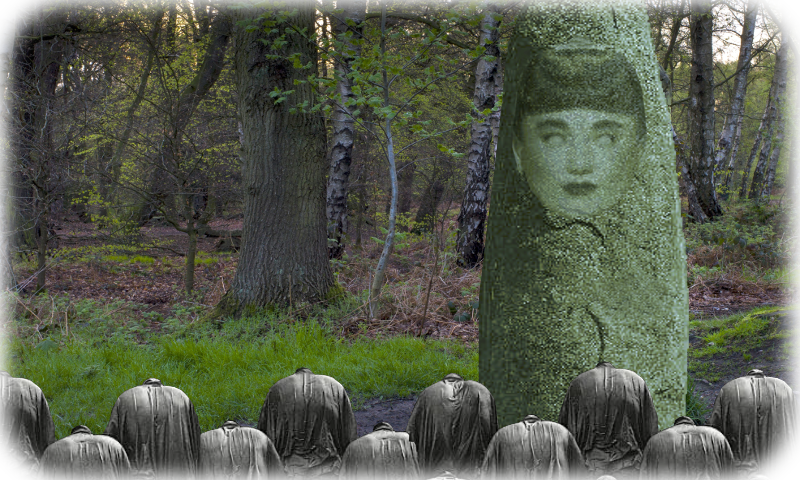


After many generations, an important change happened: the humans had become too many and the food was not enough anymore, so they started to organize hunting groups and society distinguished itself in classes.
Paolha observed the change, doubtful whether to intervene or not, but the phenomenon was already started when She saw it, since She visited that dimension not too often, while the size and inertia of that phenomenon was already enormous.
The vast non-cultivable areas abandoned for centuries and considered useless and nobody's land, turn to be valuable and became quickly the Reserves: new and precious sources of protein food able to increase force and aggressiveness of humans.
Everywhere, on Arreth, hunting had become the noblest activity: weapons were rapidly developed and, though and the war was still unknown, the Reserves became places of contests and competitions among the different tribes.
Paolha was not satisfied, but she decided to observe and not interfere until it was indispensable: for this she marked her heart and she swore on Asswan to remain faithful to this endeavor to avoid upsetting the dark plans of the ancient God. The strongest hunters became the leaders in the tribes and the social stratification appeared; this resulted in leaving to the women, weaker and less suited to this activity, a secondary role.
The races in the Reserves attributed the right to hunt on the different seasons and the tribes, now grown, joined together to win and take advantage of the preys, while agriculture was losing value. A few generations later the Hunting Kingdoms were built, which aggregated all the old tribes around a Reserve; the Kingdoms usually fell under the domination of the stronger Hunters' groups, creating a new social structure.
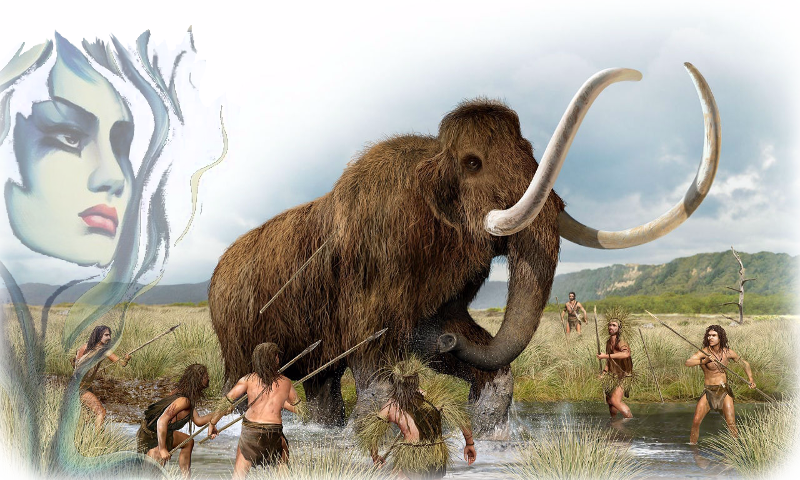


Paolha watched occasionally that world, She was not happy with the new developments, but respected His vow. However, at some point and based on some of her visions dictated by foresight, she decided to proceed to sow special seeds consecrated to Asswan and soaked them with Her powerful magic.
Paolha went down for the first time, physically, on Arreth and with her delicate hands put the luminescent seeds under a small layer of soil, the seeds had carved a Dark Seal and, as soon as they were covered, they sank into the ground to several jugera(4) until reaching a deep layer of rock where they stopped: they would have waited for the call before opening maybe for centuries, perhaps for millennia.
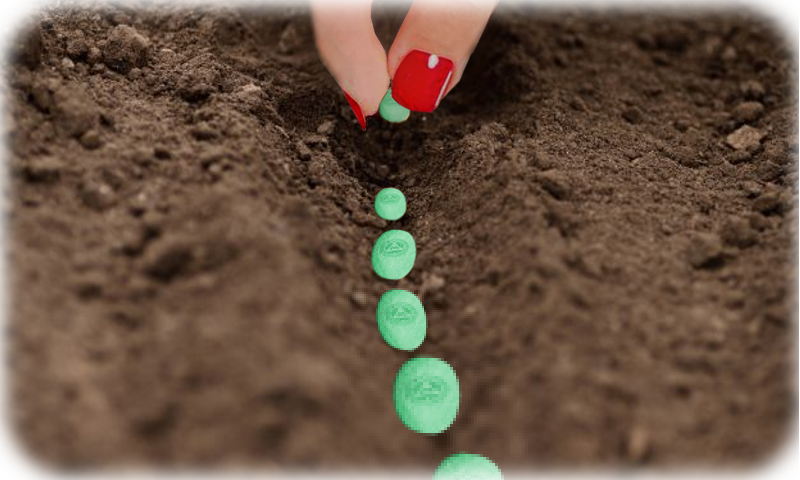


In a few centuries, the extermination of preys during hunting was such intense and the population growth so high, that the kingdoms had to fight each other to access enough resources: the War appeared.
The old rites and cults were altered, new religions were born: now the gods of the armies were worshiped; Violence and Death were justified if they allowed to protect their Kingdom and create new value.
The Kingdoms were enormous, led by a complex hierarchical structure composed of descendants of the great Hunters, now the Nobles of this World.
The scientific knowledge for the production of weapons and instruments of war soon overcame that of ancient rites, grasses and fields.
The new religions aggregated the kingdoms into huge coalitions that used all their strength to fight each other

Huge armies of simple soldiers, used without scruples, fought under the guidance of the Noble Hunters in epochal clashes, where several thousands of humans were going to die just to increase the power of the Rulers.
The devastation following was enormous, new cults appeared, less violent, but still aimed at increasing the power of humans on the world around them.
The War continued with few interruptions for many millennia.
Paolha occasionally visited the world and followed the heroes and kings looking at them as mere figures of an interminable tragedy full of ecatombes.


After many centuries, technology developed to such an extent that new weapons and new instruments appeared and were able to allow domination in a new way: the Kingdoms became Nations.
Technology undermined the Religions and the followers of their crusades.
The development of a new Industry created wellbeing and reduced the privileges of the Nobles.
The Nations changed again and became first the States and then Democracies where the richest part of the population was the wealthiest and most envied and the weaks were working in new industries and factories.
The States signed soon peace agreements after experiencing the impact of new wars based on new weapons: wars capable of reaping millions of victims thanks to new technological devices.
The war had become so lethal, that Peace finally appeared.
Paolha returned physically to Arreth and personally visited the new cities, similar to the modern ones of the Earth from which she was born, in her Dimension. She walked among steel and crystal palaces, visited the vast parks and monuments erected to celebrate Peace through the memory of the victims of the Wars. Politicians, Generals, Kings and Heads of State were immortalized in stone and bronze in those huge gardens where the children were used to play.
Paolha was happy, but she knew that this was not meant to last.


Greed, power and wealth demanded new tributes, cities grew excessively to fill themselves with factory workers, and states needed vast crowds to be taxed and used to promote their plans.
Cement and steel were everywhere, new buildings, but above all new vast buildings for the new poor: millions of humans to be exploited.
Millions of people to feed, host and use in endless activities of production and extraction of natural resources to further increase wealth of rich people.
Paohla sadly observed the realization of her vision.


The most pungent hunger of this new civilization was that of energy, not the beneficial energies of Nature, but the technological ones obtained by exploiting the land.
The large hydroelectric plants capable of drying up enormous artificial lakes in a few hours, exhausted the capacity offered by the rivers soon. So giant coal-fired, methane-fueled, and oil-powered power stations were constructed, even others able to exploit the power to crush the atoms. All the machines, the factories and the houses were powered.
Energy that absorbed resources and turned them into ashes, into harmful emissions and into gases capable of changing the climate of the whole planet.
Paolha would have liked to act, but the situation was still solvable and she decided to wait to respect her vote.


The cities were covered with fume and toxic emissions: the artificial fog obscured the blue of the sky and made humans cough. The ashes were deposited everywhere like a black layer of rough dust, the rain had become acid corroding metals and ruining clothes. Everything was evident, yet the States, the Powerful, the workers, while declaring that they wanted to reduce pollution, continued undeterred in their foolish pursuit of money, social growth and power.
Paolha saw these cities deprived of green spaces as an example of a world destined to die, while the inexorable fumes caused from those emissions slowly warmed the planet: a few tenths of a degree a year.


To produce energy it was necessary to extract every natural resource, from the earth and the seas, to create huge plants to refine it and transform it into raw materials to produce energy, steel, plastic and all kinds of goods. The earth was devastated and the increase in the temperature of the planet melted part of the eternal ice of the poles making the level of the Oceans rise a few centimeters a year.
A little thing for the inhabitants of Arreth, but clearly visible to the sages and forward-looking eyes of Paolha.



The production and society structure in Arreth had made the rich ever richer: they lived in splendid palaces in luxury while millions of poor people and workers were fighting for the minimum wage, hoping nevertheless to get rich in their turn, in some mysterious way, to be able to enjoy similar stupid comforts too.
The whole society, at all levels, was consecrated to senseless consumption, to the pursuit of power and to the collection of money.
The more they earned, the more they had power, the more they flaunted wealth: these were seen as the winners and all yearned to imitate them. Due to temperature increase and rase of sea levels, in a few decades many coasts were eroded and many huge cities were forced to move inland. The wealthiest lived often on floating palaces facing the coast, far from the polluted areas, enjoying every ease and vice, regardless of the sufferings of the world. Paolha looked at them with contempt, wishing to punish them, but still that world could have been saved and she respected her covenant without intervening.



The simple waste of that society due uncontrolled consumption became, at first, exterminated quantities destined to fill the deserts and the abandoned areas; then they grew like hills and mountains; finally, they also invaded the seas by creating huge floating islands; therefore Arreth was an entire planet and there was still enough space, however the land and the seas were heavily poisoned by now. Paolha shook her head during her observations, watching millions of poor people live and rummage in landfills just to squander the few money accumulated in other ephemeral consumer goods.


The toxic emissions became so intense that it was no longer possible to breathe close to the industrial complexes. br> The bath in the nearby waters produced now ulcerations that required immediate care and eyes were in danger of losing their sight in contact with those substances.
Whole areas of the planet had become lethal for every form of life and those that still succeeded in surviving changed to adapt to these new conditions.
Paolha looked at these men wrapped in their stupid artificial suits while they continued to extract the planet's resources and dispel them for their greed.


To the gases that created the greenhouse effect in the atmosphere by heating the planet were soon added many other emissions that clogged the sky.
The warming of the oceans had produced immense clouds and terrible hurricanes that upset lands and seas.
The consequent natural disasters became so common that they were no longer news, while the cities overpopulated were the scene of endless massacres.
Suddenly, the temperature of the planet stopped to rise: the blanket of clouds and dust, had reversed the phenomenon. Many scientists applauded the salvation given by Nature's autonomous reaction, but within few years, the decrease of some degrees of the planetary temperature gave rise to a sudden and uncontrolled phenomenon of growth of the glaciers around the world, making them to absorb all the water vapor present in the atmosphere.
The resulting drought almost completely destroyed the agricultural production and led to the extinction of over 1/3 of the animal species.
Paolha had seen this tragedy in his visions: now the point of no return had almost come, but the Superior One decided to let the inhabitants of Arreth do their last moves, before taking action.


The drought drained the water resources of the planet, before the thirst came however the hunger: without irrigation, the intensive agriculture in that polluted world, were destroyed and the greenhouse hydroponic production and artificial fields became sterile.
Endless crowds of hungry created the chaos in all States.
The endless number of the deaths produced new epidemics, the cities became lazzaretto and the countryside devastated by drought were invaded by millions of dying from hunger and thirst running away, but without any destination. In the first few months the war turned on; a war to conquer those few remaining residual resources.
Weapons conceived for total wars, but used only in small fights with tiny little states, began their run and were thrown into the epic clashes among the warriors of this dying world.
Paolha observed the battles, the refugees, the massacres, the extermination: she did not feel pity for those selfish and greedy people.


The weapons were so deadly and precise that in a few weeks all the bridges, roads, airports, ports and most of the industrial complexes were destroyed.
Cities with starvation, without electricity and supplies, lived a virtual state of siege, produced by the complete collapse of the infrastructures of the States.
The same weapons and armies risked becoming soon unable to proceed with operations, so quickly it was decided for an escalation in the vain attempt to quickly achieve a victory: first the chemical weapons and the micro fission devices raged on the battlefield, raising clouds that destroyed all life in a few minutes within short range. Then the tactical atomic warheads of medium power and, even more, the neutrons bombs, thrown to kill the soldiers, limiting damage to infrastructures and population: the losses were huge and, despite the objectives were mainly military, there were hundreds of thousands of deaths among civilians; yet this massacre was a small thing compared to the impact of famine and epidemics.
Paolha was disgusted by this stupid carnage, which would have left any winners in disastrous conditions like the losers.


It was precisely some of the losers, those who had the worst in these clashes or who thought they had lost a war on the massacre, who decided to go to the next level . Major atomic bombs and strategic thermonuclear warheads were launched to destroy the winners. Obviously they responded with equal retaliation, but at this point Paolha decided to interfere: the Superior One blew a curse that hit the wareheads. In most cases they fell down without detonating, sometime releasing the radioactive contents of their wareheads in areas near the targets.
The Superior One would not have left the possibility of annihilation of the creation of Asswan to those stoles. Paolha blocked the spread of the most dangerous radioactive substances of the "end of the world" bombs, destined to destroy life for centuries. However, pollution, drought, toxic, radioactive and pathogenic warlike agents had transformed those that were once rich and fertile lands in arid deserts covered with corpses and destroyed armaments.


The war continued until fuel, ammunition and soldiers ran out.
The cities were full of dead and in ruins, the governments had collapsed: endless rows of refugees invaded the desolate lands of the dying planet, leaving behind an endless trail of dead reaped by disease and hardship.
Survivors were decimated by that poisoned world, devoid of resources and full of threats.
Years passed; the toxic and radioactive clouds after having continued their poisonous activity were partially reabsorbed by the environment except in a few areas: the lands of long death, areas destined to be precluded to life still for countless years.
You could breathe almost everywhere a non-lethal air, although often the weakest organism can get a harbinger of pulmonary diseases and dermatitis.
The impenetrable steel hulls of the destroyed tanks rusted.
Paolha was now close to dissolving her seals.


A new society had emerged from the apocalypse, nomadic tribes devoted to endless tribal clashes for the last resources of food, water, gasoline and anything else left; many were devoted to cannibalism and not only to their enemies.
Those band had swept away any residue of civilization and created real hordes of human waste even more toxic than those produced by industries.
Paohla dissolved his seals , the seeds buried for millennia opened before, from there a few hours from the extreme depths of the earth the Solagreeh(5) emerged, stolons of Zulagreehns (6) and succubus of Torbanaith (7).
From the buds of these enormous plants, capable of growing in the most radioactive desert by absorbing the impiety itself inherent in the dark seal of Asswan, were generated innumerable Zulagreehns, demons of Amarazdh (8), powerful chlorophyll dragons.
These creatures were produced in many forms, some were able to crawl, others to swim, others to run, others to fly.
The Zulagreehns scattered over all Arreth and confronted the tribes of the survivors in clashes where the power of the Demons swept the enemies without mercy.


Zulagreehns soon dominated Arreth following the will of Paolha, Superior One of that dying world. No mercy for those who tried to resist or who was not they surrendered: the demons exterminated them by rending their flesh, but soon Paolha harassed the hunger for the destruction of these demons and used them to take prisoners and to serve as her Guardians.
The survivors of the tribes, the nomads and all the humans still alive, they were collected and escorted by the Zulagreehns through the dead lands, so that Asswan's destiny was fulfilled.
The caravans of the prisoners crossed the barren plains on foot beneath the deafening cries of the chlorophyll dragons without being able to escape in any way.
The screams of the Demons acted like a real whip, able to be addressed with extreme precision a single human or a group: their screams could inflict pain, modulated precisely from the level of an abrupt encouragement to that of an unspeakable punishment that led to insanity.
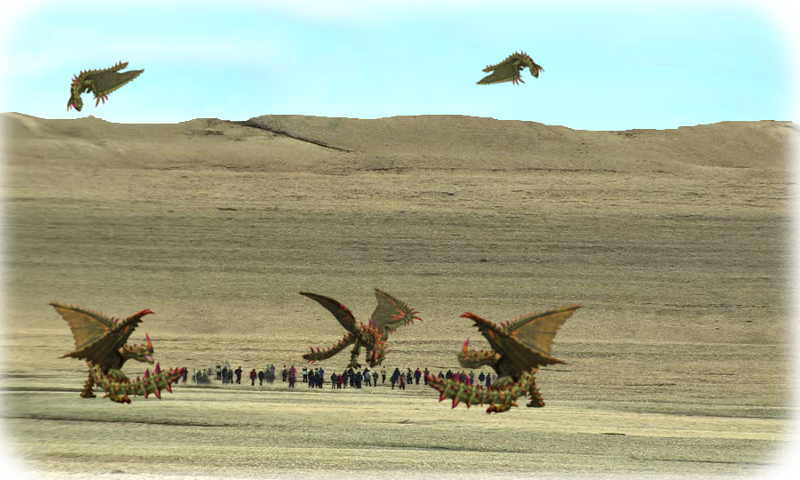


The Zulagreehns soon learned to utter strident scream in a way that humans understood so as to impose commands: when the prisoners were at the points chosen, the Guardians employed them in intense construction work, to build huge temples in Asswan and Paolha.
The work was extremely tiring, the resources scarce, the interminable timetable and the severity of the Guardians extreme: with such conditions many of the prisoners died in the reconstruction, but always new groups of prisoners, gathered in the arid lands, were led by the Zulagreehns to the erection sites of the temples.
Paolha returned to Arreth a third time and continued to frequently visit this world to oversee the work.
Special collars of an alloy of Ejri (9), forged by the spell of the Superior One, were imposed on the prisoners: on each was engraved a green butterfly, able to increase the resistance and the strength of humans to be able to complete their task in those extreme conditions; the collars could not be removed without applying magic formulas unknown to the prisoners. The collars were able to adapt to the prisoner necks becoming immediately symbionts of then.


At the first luster the first temples were completed: pyramids with large steps, hight two plectrums (10), at the peak of which Paolha lit the Sacred Flames of Dancing Green Light, in honor of Asswan.
The Flames of Dancing Light sprayed the land with green flora, they were able to purify the air and make the earth fertile again.
The powers of Paolha were put to the test during the re-foundation of Arreth, while new and larger temples, tall up to 5 plectrums, were erected under the pressing direction of the Zulagreehns: temples capable of lighting other Flames of Dancing Light and of extending their power to broader horizons.
Every new temple, every new spell, every new fire helped to clean the planet and Paolha had to order innumerable sacrifices to have the energy necessary to complete this work: many prisoners were sacrificed to Asswan in those times.
The surviving prisoners worked without rest under the Guardians: only the collars of Ejri allowed most of them to survive those interminable work shifts. However the prisoners were, magnanimously, allowed to sing without end the Mantra and the Prayer in Paolha, during all hours of daily work; they sang and sang until the completion of each Building or until they are dismissed as empty and exhausted bodies:


Harshly, Falling
Torture, Slashes
in Night are calling
for ashes spirited away
It grows Stronger through the ages!
Suffer the hunger
Accept the pain, Let our skin flay
and though it's cold here
We rise His Palaces in His Name
It's not an home,
it is an Altar where to sting
us inferior for the Supreme King
it a Temple to worship Doms
and to stomp and maim

...
...
...
.
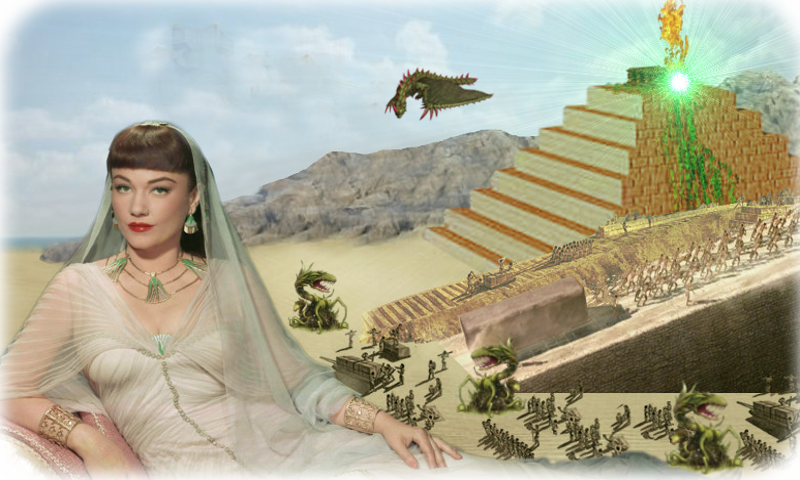


More than six decades had passed since the beginning of the reconstruction and Paolha visited Arreth almost every month.
A new generation was born and the young men now labored alongside the elderly.
The Sacred Dancing Flames had already cleared a small part of the land and were covering it with flora, the air was cleaned everywhere, except in the long deaths.
When all the main temples were completed, Paolha divided the humans, on one side she placed the young and the innocent, called Daughters and Sons of Arreth; they get removed the Collar of Ejri and were sent to the first reconstructed areas to begin a life of prayer and respect for Nature.
To the guilty of past crimes, rebels, blasphemers and violent, instead the Collar was left of Ejri and they became serfs, put to work all the remnants of reclamation of the contaminated areas: the wells, the sludge bogs, the mountains of debris, the lands of long death.
It was a difficult task, where the protection of the Collars of Ejri was only partially able to protect the prisoners who died slowly and painfully under the merciless lashes of the Guardians who gave him peace.


The Zulagreehns continued to use the serfs in land reclamation, now fertile again.
New crops were activated and, depending on the crimes, the servants of the glebe were allocated to more or less heavy tasks.
They continued to sing nonstop for all 18 hours of daily work, 7 days a week, the Mantra and the Prayer , saying:

    Whip and Sting help us to serve and do things
    Whip and Sting help us to serve and do things
    Whip and Sting help us to serve and do things
    Whip and Sting help us to serve and do things
    Whip and Sting help us to serve and do things
    Whip and Sting help us to serve and do things
    Glory to the Superior Ones, Glory

    ...
    ...
    ...


    Species
    by now considered practically extinct, they were repopulated and used to enrich the land.
    Animals of all kinds, birds, fish, but also beasts of burden and from the yard.
    The serfs could not eat the animals, but only the Quinoa produced in the agricolture, the sour milk of the herds, the Tempeh and the Tofu, produced by Soy.
    Agricultural production rapidly increased and the serfs were incessantly motivated by the Guardians.


    The servants of Gleba continued to establish new crops: food was enough for the entire population that was growing again.
    Paolha had decided for the population just a Vegan diet, and only the Daughters and the Sons of Arreth could, on rare occasions, feed on poultry or red meat.
    The new plantations demanded enormous efforts to take root despite the enormous help of the Sacred Dancing Fires.
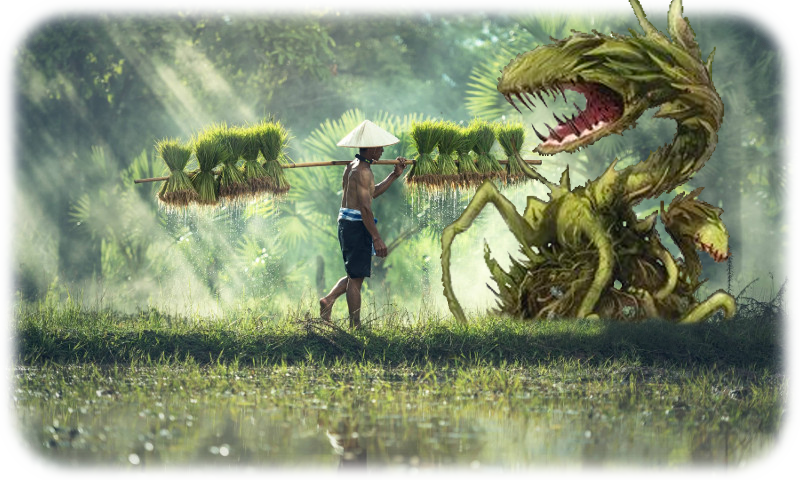


    The serfs converted the hills into terraces to increase agricultural production in areas already completely restored.
    The work was as immense as that of the construction of the Temples, even if less flashy, and even in this case the use of the Zulagreehns was essential for successfully completing this monumental undertaking. br>
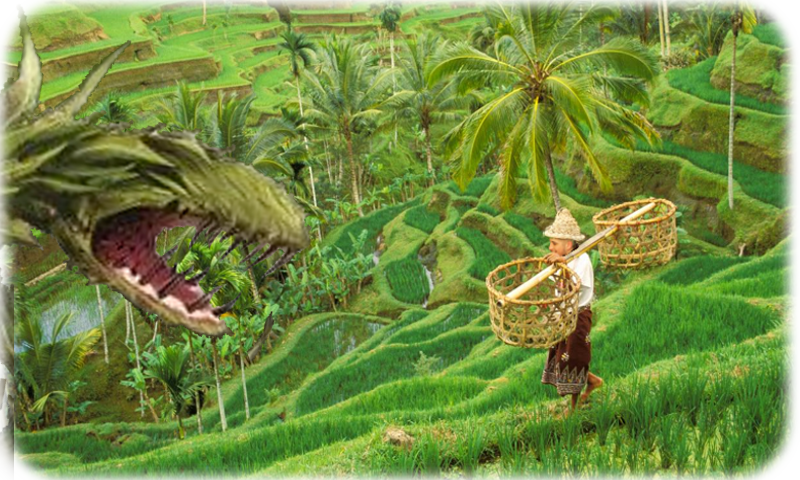


    At this point, despite the enormous use of magic and labor, there was still much to do before leaving Arreth to himself again: the oceans were still polluted and life was hard to spread in the seas.
    To solve the problem, Paolha commanded a huge series of sacrifices of serfs to Asswan in order to acquire the power to make a gigantic prodigy: her magic this time allowed to create an immense storm of pure water faling for months, renewing the seas and cleaning them up.
    The Suerior One was exhausted at the end and did not visit Arreth for several months after it. In fact after this intervention, Paolha decided to modulate her efforts and consequently the necessary sacrifices, reducing the influence of Sacred Dancing Fires and leaving the majority of the residual labor to the serfs.
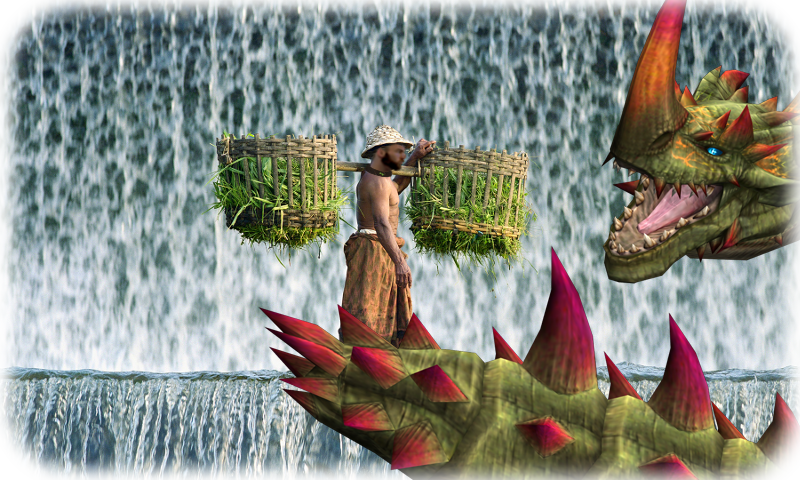


    Alongside the great temples with the Holy Firemen Dancing, others were erected for worship among the Daughters and Sons of Arreth.
    Buildings in the forest next to villages of small houses completely integrated into the green.
    The cult prospered and the population grew again, while the Guardians continued to watch humans and their behavior closely.
    As the past criminal were almost extinct, like the blasphemers and the other offender, Paolha commanded that the ranks of the serfs had to be reinforced by taking all those among the Sons and Daughters of Arreth who were not sufficiently zealous to obey the Commandments and the Rule that prescribed properly honoring Mother Nature.
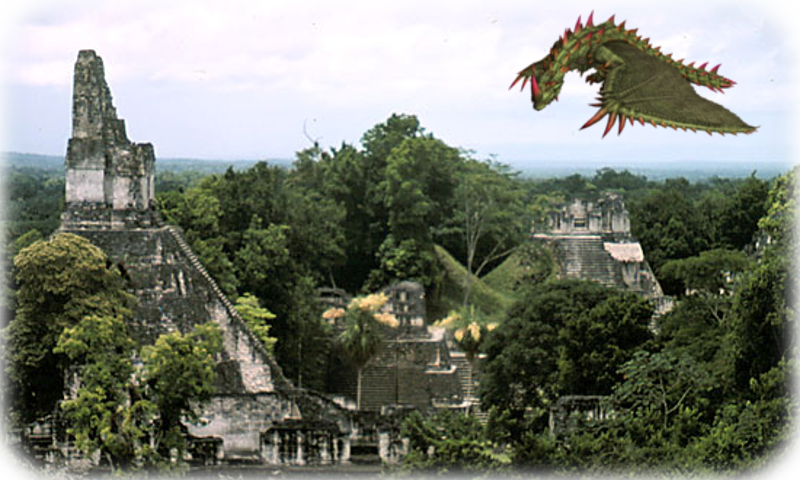


    The Zealots The Sons and Daughters of Arreth were happy to respect the cult and to guarantee their own way of life: there was a constant celebration of propitiatory rituals in the temples and before the enormous statues of Paolha that had been erected in the forests.
    The Zulagreehns controlled that the sacrifices and ceremonies were carried out properly and with the required frequency. new civilization now lived in perfect symbiosis with Nature and Arreth was re-flowering.
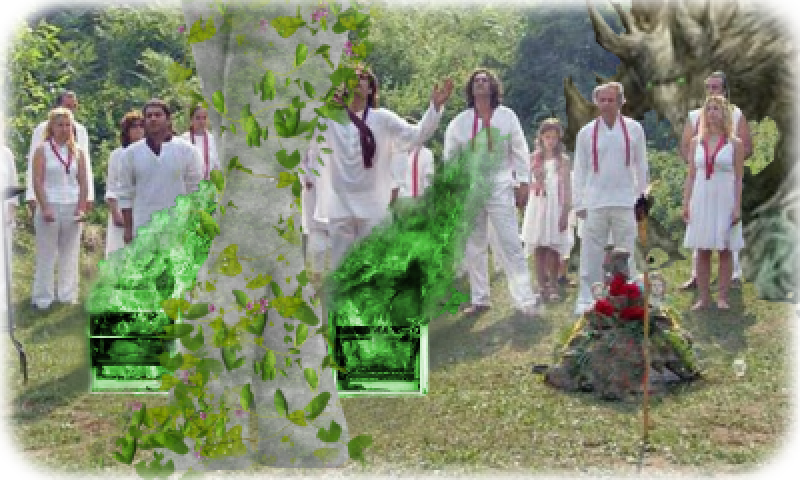


    A series of new infrastructures were built, from serfs, into the new forests of the reborn planet. Everything was done without the aid of technology: huge aqueducts, sewage systems, roads and everything that allowed the new community of Zealos Daughters and Sons of Arreth.
    The vegetation absorbed and integrated with these stone and mortar constructions celebrating the expressed desire of Asswan just as Paolha had wanted to exuend it.
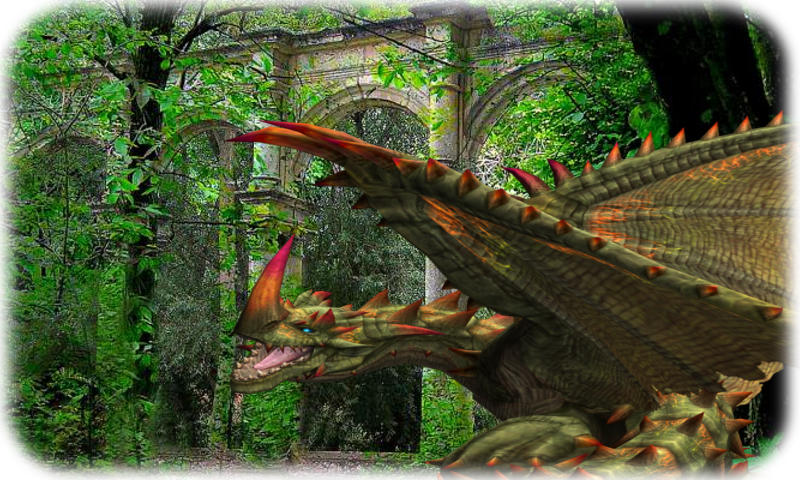


    New generations were born from the grandchildren of Paolha, but also between serfs.
    The daughters and sons of the guilty also grew as a serf, expiating their sins and those of their parents under the watchful and ruthless eyes of the Zulagreehns.
    The crops were now such as to support a large population and the now almost completely healed planet was now intensely repopulated.
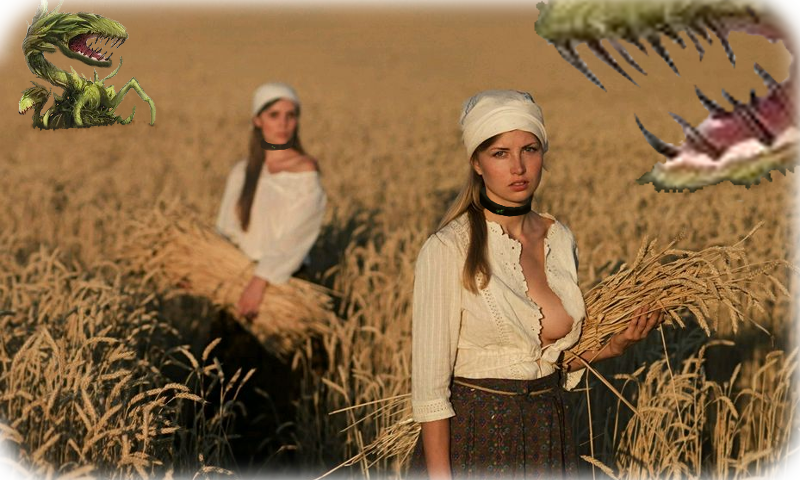


    Paolha established a body of Priestesses, giving them the epithet of Nepiphys of Paolha, destined to celebrate rites and myths in the forests, the sacrifices before the tall Statues and in the temples.
    This led to the reinvigoration of the power of Paolha and enrich the glory of Asswan, as it was required by him millennia before.
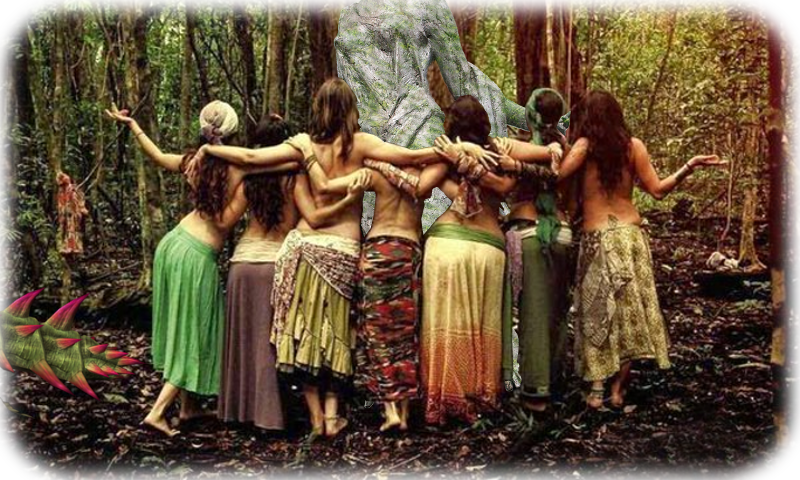


    At this point the serfs also built huge palaces for Paolha and for His Guests.
    Dark and Tall Gothic Castles , perfectly integrated into the green, which dominated the lush valleys of this reborn world and the villages of the Zealos Daughters and Sons of Arreth.
    They were beautiful buildings that offered an opulent refuge for the Superior One and for Her friends in full respect of Mother Nature and celebrating the cult of Asswan.



    One day, Paolha remembered one of the floating buildings she had observed on old time and wanted to search for it.
    The Palace laid at the bottom of the ocean: it had been destroyed during the wars and little remains of what had been a luxurious palace where there. Paolha recovered it from the depths and ordered serfs to work for hundreds of thousands of hours to rebuild it, practically from the scratches, since in the end there were very few surviving original parts.
    Paolha put the Floating Palace into the sea and offered there her Hospitality to Friends and Superior Ones in that decadent remnant of a lost world.
    Now on the horizon appeared a coast covered by a lush and green forest, the air was pure and the sea clear.
    Arreth had been cleaned up and she was ready to serve Asswan, the Ancient God, as he had commanded.
    That planet has been cleaned and She had punished the guilty. Paolha felt extreme satisfaction thinking about all and enjoyed the taste of this sensation while one of her servants offered her a glass of a rare wine.
    In the background the flight of the Zulagreehns and its cries reminded that you can not clean up a world without making sacrifices.
    Paolha was heartened by so much success, she lay down and rested as she liked to make while others labor as She was used to do since the time of the construction of the temple of Hathor (11), during the reign of Amenophis II (12).

    Asswan observed the work of Paolha from another dimension, along the duration of those few millennia until that restore of the Floating Palace.
    The Ancient God writhed, secreting his precious sebum from a thousand of his pulsing globules, in unison all the 63 million Zulagreehns of Asseth hissed a silent yelp that painfully ulcerated the slaves in proximity, without, while that sound was silent to others: Asswan was satisfied and did not want to disturb Paolha, his Adored Follower.


    Notes:
  • (1) Paolha Ashegem Voilition: Superior Ones that, based on different hypothesis, is supposed to be evolved from an Egyptian noblewoman, born during the 18th Egyptian New Kingdom Dynasty
  • (2) Arreth: Planet site in a parallel dimension that would be created by Asswan to meet its needs
  • (3) Asswan: Ancient God of immense powers, from some assimilated to the Ancient Great named Arwassa
  • (4) Iugero: measure of length equal to 2,500 m
  • (5) Solagreeh: Mythical Stolons, or branches that emerge from an gem near the collar of a mythological plant dedicated to the cult of Torbanaith. The plant was supposed to generate Zulagreehns, plant monsters. The Solagreeh flowing and unrolling on the ground sank at regular intervals under the ground, regenerating by issuing roots and stems from whose buds were given birth the above plant monsters
  • (6) Zulagreehns: plant monster with the shape of a spiny dragon capable to have different natures and forms (terrestrial, aerial, aquatic). It is said that the Zulagreehns were generated by a powerful evil of the Amarazdh God.
  • (7) Trobanaith: Supernatural Creatures dedicated to plot and lie to protect the Earth Fertility, that of Women and Childbirth; for some assimilated to the Fauns that followed the Armenian Divinity of Zoroastrian origins known as Anahit, daughter and wife of Aramazd, often identified as a mixture of Artemis and Aphrodite
  • (8) Amarazdh, Supreme God assimilated by some to Aramazd, brother-in-law of Ahura Mazda from the Zoroastrian Armenians and later identified with Zeus. For others it is a deity equivalent to Baal.
  • (9) Ejri: mythical magic metal alloy able to protect and imprison the slaves of the Superior Ones (from the root E Forte, Mule Force, Jri Iron) < li> (10) Plectrum: Unit of Length equal to 29m and 60cm
  • (11) Temple of Hator: Temple named after the Egyptian Goddess of Joy and Female Love, located in Deir el-Medina in Egypt and built between 18 and 20 Egyptian Dynasty of the New Kingdom
  • (12) Amenophis II: also known as Amenhotep II, Pharaoh of the 18th dynasty of the New Kingdom (1427 BC - 1401 BC)


    Italian


    English